
Tanzania: In the Footsteps of Selous
Tanzania has always been a place I wanted to visit. For me, the attraction goes well beyond the hunting. Few places in Africa bring together so many of the things that have fascinated me throughout my life - history, exploration, literature, wildlife, and the great age of the African safari.
The country we know today as Tanzania was once part of German East Africa. Following Germany's defeat in the First World War, the mainland territory of Tanganyika came under British administration, first as a League of Nations mandate and, after the Second World War, as a United Nations Trust Territory. Tanganyika achieved independence in 1961 and, following its union with Zanzibar in 1964, became part of the modern United Republic of Tanzania.
Just off the coast lies Zanzibar. During the nineteenth century, it became one of the great gateways between the Indian Ocean and the African interior—a point of departure and supply for explorers, missionaries, traders, hunters, and adventurers venturing into largely unknown country. The names associated with that age—David Livingstone, John Hanning Speke, Richard Francis Burton, and Henry Morton Stanley—remain inseparable from the history of African exploration.
Tanzania's geography is equally remarkable. Mount Kilimanjaro, the highest mountain in Africa, rises in the north. Lake Victoria, Africa's largest lake and the world's second-largest freshwater lake by surface area, forms part of the country's northwestern boundary. Far to the south lies one of the great wilderness areas of Africa—the vast ecosystem historically associated with the Selous Game Reserve.
For a hunter with an interest in African history, the name Selous carries particular significance.
Frederick Courteney Selous was one of the legendary figures of the great age of African exploration—a British hunter, naturalist, explorer, author, and soldier whose travels took him through some of the wildest country in southern and eastern Africa. When the First World War came, Selous returned to military service despite being in his sixties. On January 4, 1917, he was killed in action at Beho Beho while fighting German forces in what was then German East Africa. He was buried near the place where he fell.
Selous also had a connection with another historical figure I have long admired: Theodore Roosevelt. The two men knew one another, and Selous was among the experienced African hunters Roosevelt consulted in preparation for his great African safari of 1909–1910. Roosevelt's account of that expedition, African Game Trails, became one of the classics of African sporting literature.
There is a literary connection as well. Selous is often cited as one of the real-life inspirations for Allan Quatermain, the hunter and adventurer created by Sir H. Rider Haggard in his 1885 novel King Solomon's Mines. Quatermain was almost certainly a composite rather than a fictional version of any one man, but the similarities between the fictional hunter and men such as Selous are unmistakable. Quatermain subsequently became one of the ancestors of the modern fictional adventure hero and is frequently mentioned as one of the literary influences behind Indiana Jones.
As a lifelong reader of Haggard—and of later African writers such as Ernest Hemingway and Robert Ruark—these connections have always appealed to me. Add Theodore Roosevelt, the history of colonial Africa, the old explorers and professional hunters, and the vast wilderness that still bears Selous's name, and Tanzania occupied a special place in my imagination long before I ever set foot there.
I had hunted Africa on numerous occasions, most recently in Zambia's Luangwa Valley, but this safari would be different.
Our destination was the Ngarambe-Tapika Wildlife Management Area, on the southeastern edge of the great Selous ecosystem. This is still genuine wild Africa—miombo woodland, riverine cover, grasslands, thick bush, and enormous stretches of country in which wildlife moves largely according to water, food, and the seasons rather than fences or roads.
Getting there was itself part of the experience.
Mason and I traveled first to Johannesburg, then onward to Dar es Salaam, before leaving the world of international airports behind for a flight into the bush. Eventually we came down on a tiny airstrip in the Selous country, where the scale and remoteness of the place began to sink in. We had gone from commercial aircraft and international terminals to a strip carved into the African bush.
And with us were two rifles that represented two classic approaches to African dangerous-game hunting.
I carried a .470 Nitro Express double rifle, a cartridge and rifle combination inseparably associated with the golden age of African dangerous-game hunting. Mason carried a Winchester Model 70 chambered in .375 Holland & Holland Magnum—another classic African combination and one of the most versatile dangerous-game cartridges ever developed.
There was something fitting about arriving in Selous country carrying those rifles. The landscape, the history, and even the equipment connected us in a small way to more than a century of African safari tradition.
But this trip was not really about recreating the past.
It was about creating a memory of our own.
I had experienced African hunting many times before. For my son Mason, however, this would be his first dangerous-game safari, and our quarry would be perhaps the most iconic dangerous-game animal on the continent: the Cape buffalo.
Buffalo hunting is fundamentally different from most other hunting. You are not simply looking for an animal. You are looking for the right animal—often an old bull that has separated from the breeding herds, the type of solitary or bachelor bull traditionally called a dagga boy. Finding one can mean hours of looking for tracks, following spoor through thick country, reading the wind, losing the trail and picking it up again, and eventually closing the distance on foot.
And when the buffalo is finally found, there is another reality: this is an animal capable of turning the hunt around very quickly. That combination of tracking, close-range hunting, uncertainty, and genuine consequence is part of what has given the Cape buffalo its legendary reputation among African hunters.
For me, however, the greatest anticipation came from experiencing all of this with my son.
There is a tendency to measure a safari by the animals taken. I have come to believe that misses the most important part. The trophy eventually hangs on a wall, but what remains most vivid are the things that surrounded it—the long walks, the dust, the trackers studying a print in the sand, conversations around the fire, the anticipation before daylight, and the people with whom you shared those experiences.
And it did not take long for Mason to discover exactly what buffalo hunting could be.
The First Day
Our first day introduced Mason to buffalo hunting in a way no amount of reading or conversation really could.
We spent much of the day searching for fresh sign and eventually worked a large herd of buffalo. Mason had buffalo pass close to us, giving him his first opportunity to experience these animals on foot and at close range.
It was only the beginning, but it gave him an appreciation for their size, their presence, and the entirely different atmosphere that surrounds hunting Cape buffalo in thick African bush.
The following day would bring his first trophies of the safari.
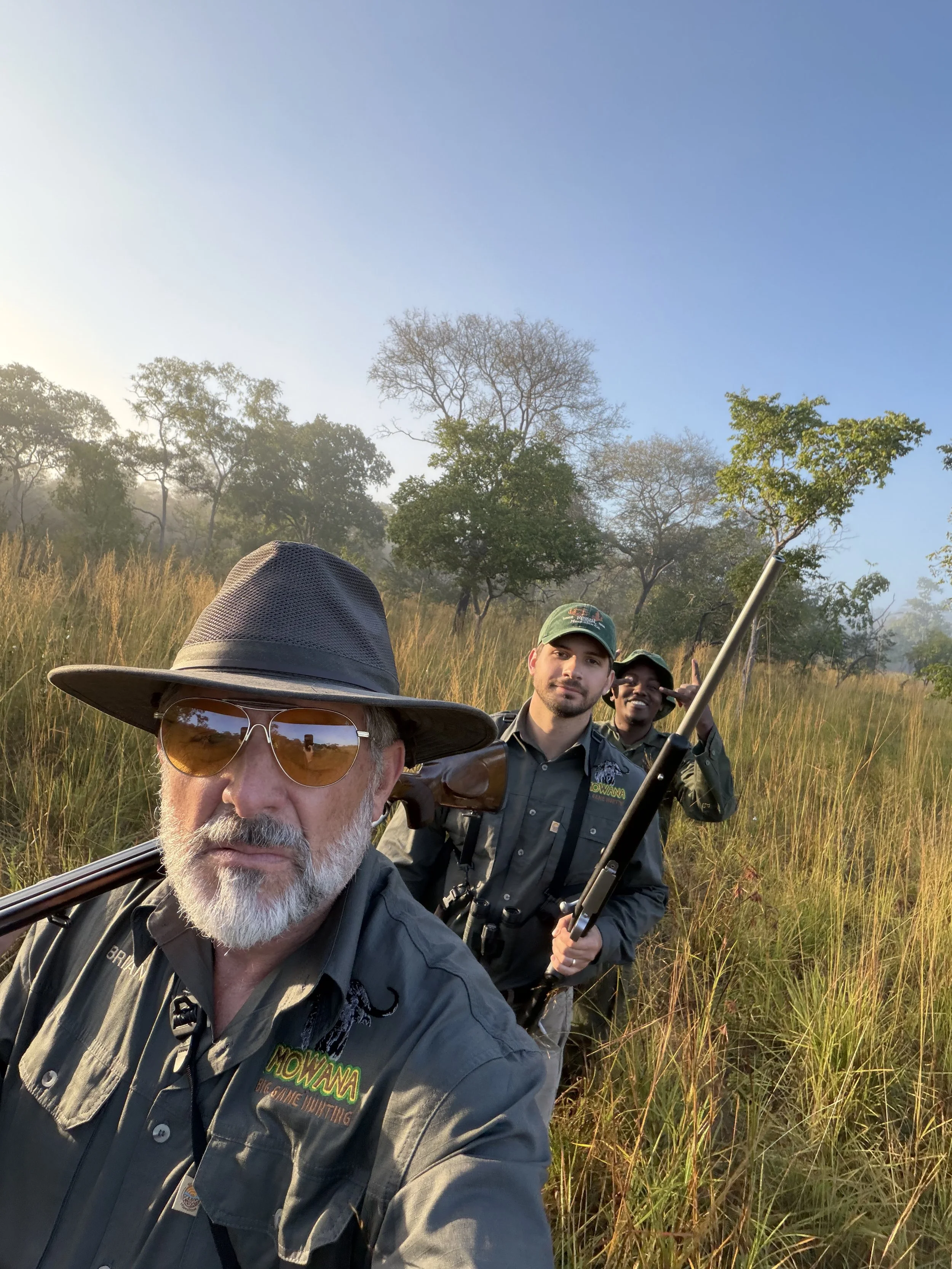
Mason's First Trophies in Tanzania
On the second day of the hunt, we again set out looking for fresh sign.
Along the way we encountered a large male spotted hyena. We quickly dismounted and took up the trail. Mason eventually had an opportunity with his .375 H&H Winchester Model 70 and made a good first shot.
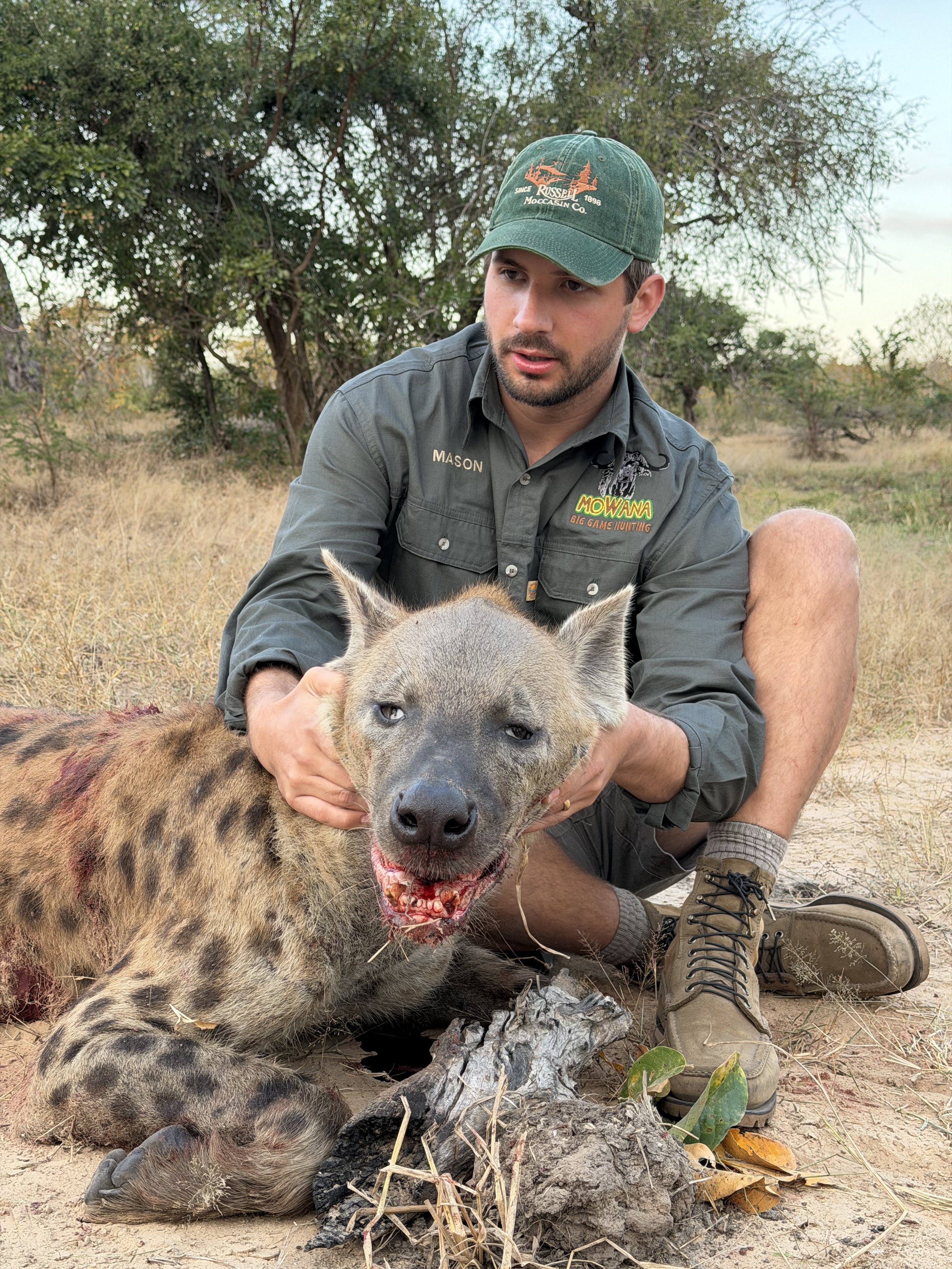
We followed the hyena for several hundred yards before Mason was able to place a second, fatal shot.
When we recovered him, we realized just how exceptional the animal was. He was a very large, old male, his teeth heavily worn with age. We believed he had the potential to score extremely well in the SCI record book.
For Mason, it was his first trophy of the safari and a memorable beginning to the day.
We continued hunting and later came across a small herd of Nyassa wildebeest, a distinctive regional form of wildebeest found in this part of southeastern Africa. They are handsome animals, distinguished in part by the conspicuous light-colored band across the muzzle, along with striking facial markings, a heavy mane, and dark vertical striping.
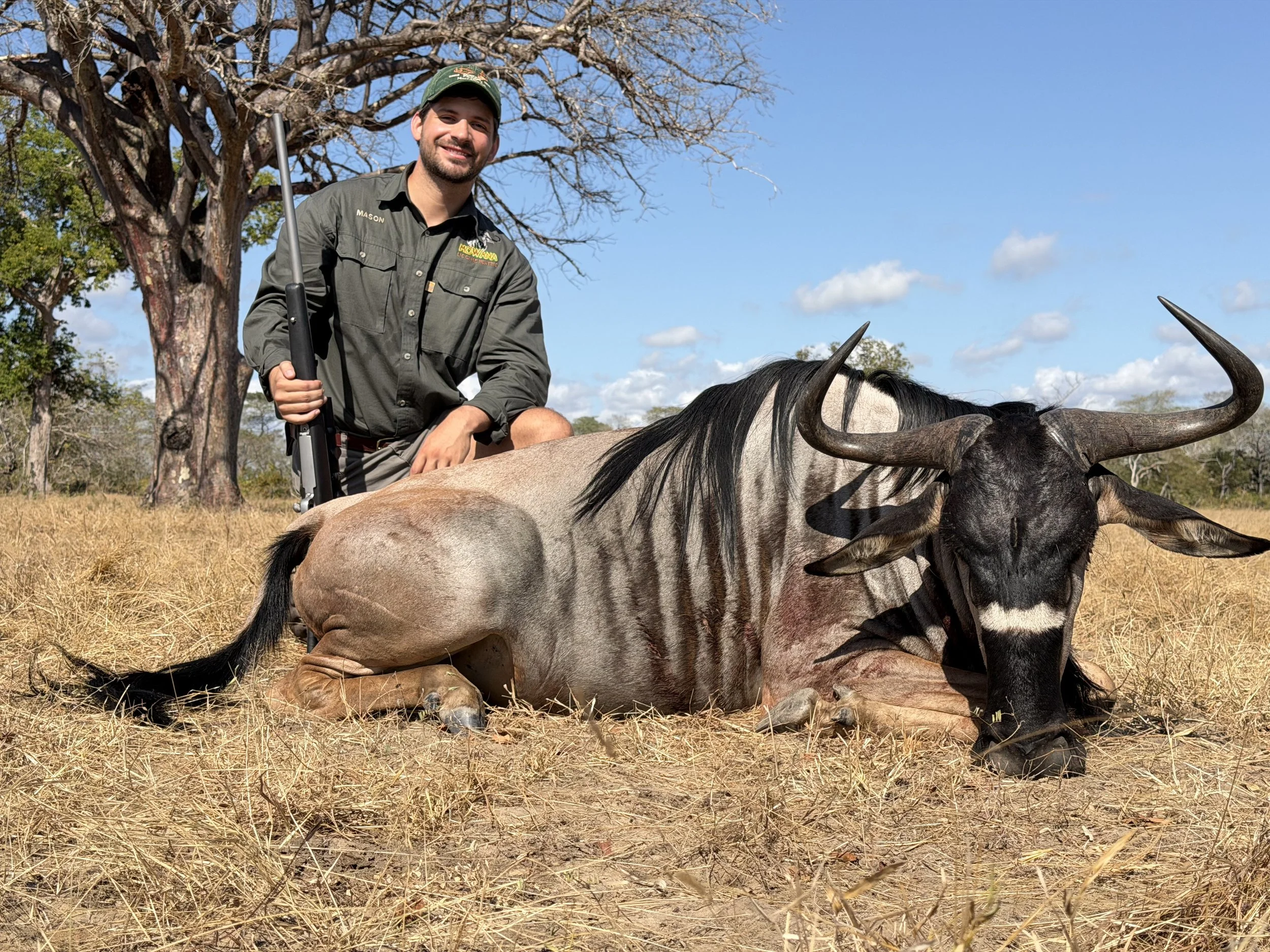
Once again we dismounted and began following them on foot.
The stalk continued for several miles before we finally managed to get Mason into position for a shot. He settled into a seated position and used Wig's shoulder as a field rest for the rifle.
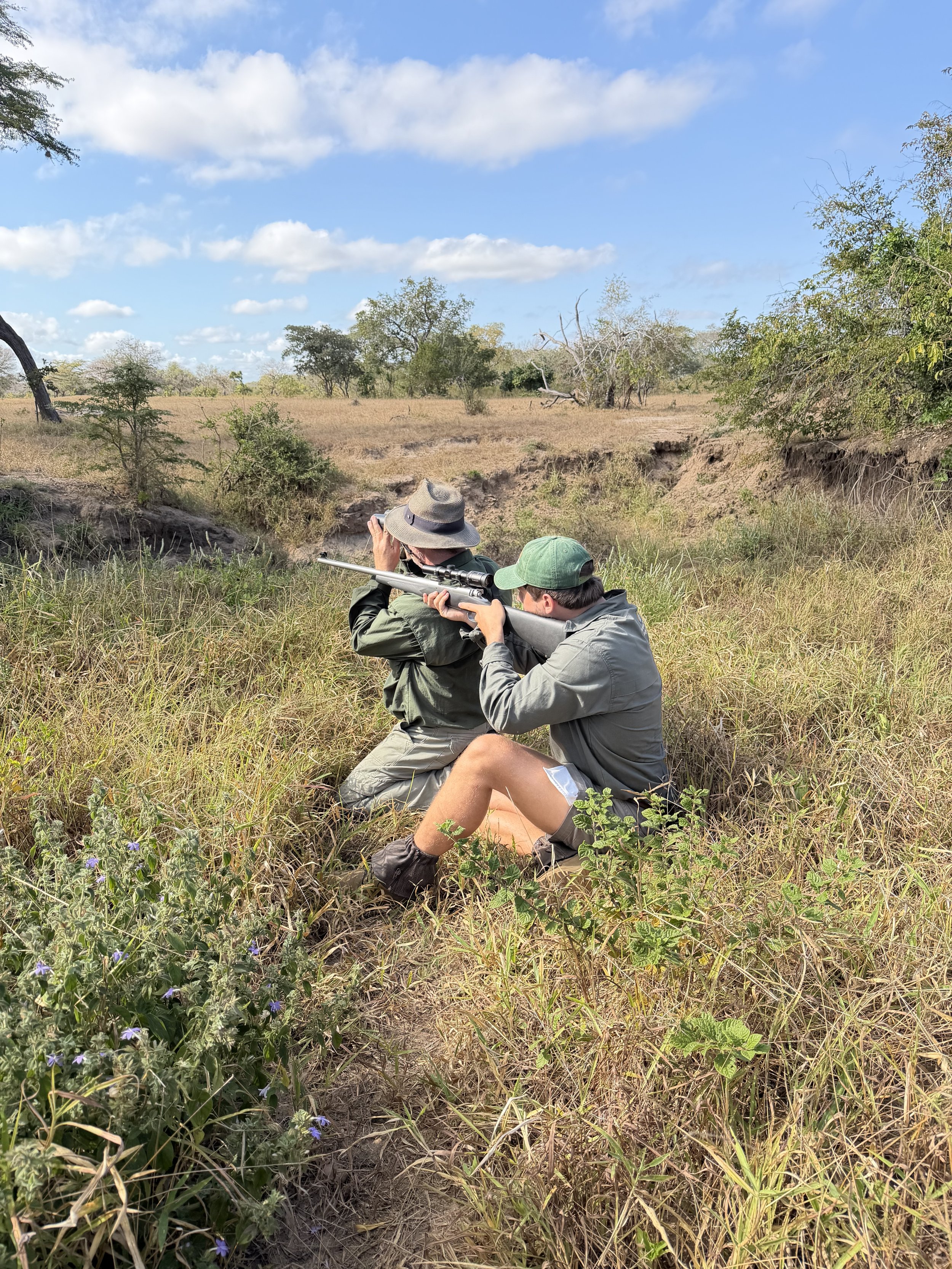
Mason took his time.
He found the animal through the sights of the .375, steadied himself, and squeezed the trigger.
At the shot, the wildebeest went straight down.
We waited several minutes for the other animals to move away before cautiously approaching. When we reached him, it was clear Mason had made an excellent shot.
He was a beautiful bull, with a thick mane and the distinctive markings that make the Nyassa wildebeest such an attractive animal.
We spent some time arranging photographs before radioing for another vehicle to come and collect the animal.
As we waited, we sat on a fallen tree and enjoyed the moment.
Africa, however, apparently decided that things had become a little too quiet.
A Cape buffalo suddenly came trotting past us at close range before disappearing into the bush.
He was not a trophy bull, but that hardly mattered. At close range, every Cape buffalo is impressive.
I was particularly pleased that Mason had been able to take both the old hyena and the wildebeest before we turned our full attention to buffalo. Both hunts required him to stalk, control his excitement, get into position, and make careful shots under field conditions.
That experience mattered.
Because eventually he would be asked to do the same thing with a Cape buffalo in front of him.
And a Cape buffalo—known for good reason throughout the hunting world as “Black Death”—was an entirely different proposition.
Into the Bush
On the third day of the hunt, we left camp early and spent several hours riding in the back of the Toyota Land Cruiser, looking for fresh sign.
With us was our good friend Wighardt van der Gryp, known simply to us as “Wig.” Wig had traveled from South Africa to join us and help with the hunt. He is a professional hunter himself, although he was not officially serving in that capacity on this safari.
Our professional hunter was Peter, a 68-year-old native African PH who had begun his career as a tracker. Over the years, he had accumulated a lifetime of experience in the African bush, including working as a tracker for Dick Cabela of Cabela's.
The rest of our bush team included our trackers, Patson and Isaya; our driver, Basha; government game scout Patrick; and a young assistant tracker named Rashid. Rashid came from a small local village in the Tapika area and knew the country intimately.
Basha generally remained with the Land Cruiser once we began tracking on foot and would be summoned by radio when we needed to be picked up. The rest of us would follow the trackers into the bush.
That became our routine. We would drive until someone spotted promising sign—fresh spoor, tracks, or some other indication that buffalo had recently passed through. We would dismount, inspect it carefully, determine whether it appeared to be a good bull or group of bulls, check the wind, and, if everything looked right, begin following on foot.
The season had been unusually wet, and the grass was tall. Walking through it was more difficult than it appeared. During the rains, elephants, hippos, and buffalo had churned the ground beneath the grass with enormous footprints. Once the country dried, those depressions hardened and disappeared beneath the vegetation, leaving treacherously uneven footing.
Buffalo crossing these open areas in the morning left another clue. You could often see where the tall grass had been pressed down, giving the trackers a direction of travel even when individual tracks were difficult to see.
That morning we found good sign early and took up the track.
We were following three old dagga boys.
Their trail led us for several miles across tall grass toward the thick riverine bush bordering a mostly dry riverbed. The river itself had been reduced largely to sand, bounded in places by high banks and dense vegetation.
Once the buffalo entered that cover, everything changed.
The bush was extremely thick—thorny vegetation, palms, and tangled cover broken only by narrow game trails. At times you could see no more than a few feet ahead. Somewhere in that vegetation were three Cape buffalo, and we were following the same narrow paths they had taken.
It was the sort of country that makes you acutely aware of every sound.
At one point we entered a small clearing, perhaps thirty yards across, before the bush closed in again. Wig noticed several oxpeckers, or tick birds, flying from the thick cover ahead of us. He quietly wondered aloud whether the birds had simply flown off for water and were returning to the buffalo—or whether they had just come directly off buffalo standing somewhere in the bush ahead.
It was a small observation, but an important one.
We crossed the clearing and stepped back into the thick cover.
Then everything happened at once.
From somewhere directly ahead came a series of deep, guttural grunts, followed immediately by the sound of something large crashing through the brush.
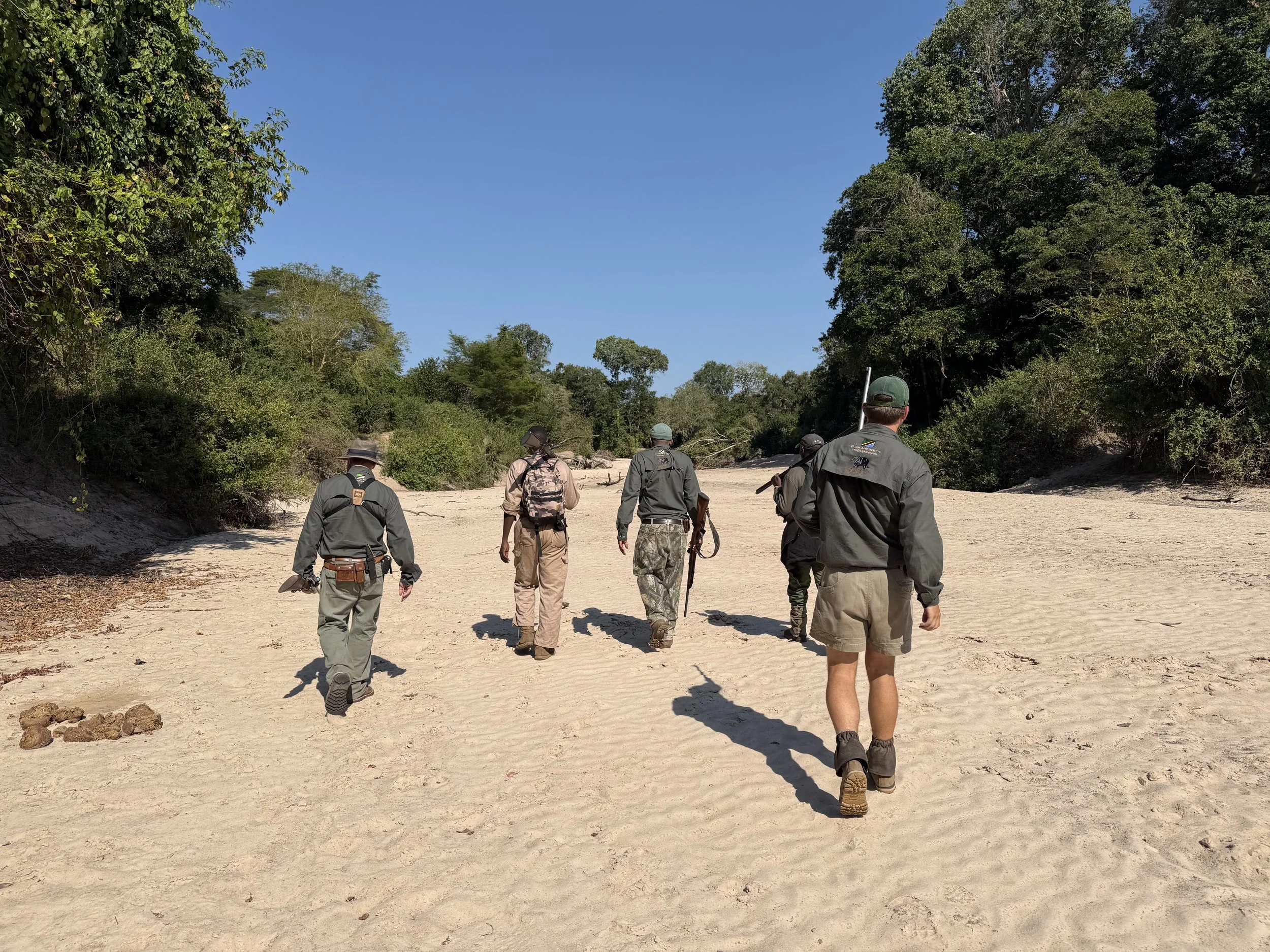
Before I could fully process what was happening, I was staring directly into the face of a Cape buffalo at no more than eighteen yards.
I brought the .470 up.
Wig, standing to my right, yelled. The buffalo suddenly changed direction and ran toward Wig and Mason. Almost simultaneously, the other two bulls exploded from the cover and broke to my left.
One passed so close that it seemed I could have reached out and touched him with the barrel of my rifle.
The trackers had already scattered for cover.
And then, almost as quickly as it had begun, it was over.
Three buffalo disappeared into the bush.
My heart was pounding. We had not been charged, no one had been trampled, and no shots had been fired.
Afterward, Wig looked at me and asked, “Why didn't you shoot?”
I told him that had the buffalo continued directly toward me, I certainly would have. But the entire encounter had unfolded in only a few seconds. At eighteen yards in that thick cover, I was not thinking about horn bosses, spread, or trophy quality. I was thinking about whether that buffalo was going to run over me.
Then he turned, and the moment was gone.
It was quite an introduction to hunting old dagga boys for Mason.
He had already experienced working a large herd on the first day and had taken his first two African trophies on the second. But this was something entirely different.
This was close, sudden, and personal—the kind of encounter that makes it very clear why Cape buffalo command such respect.
And in many ways, this was exactly the experience I had hoped Mason would have.
I wanted him to understand that buffalo hunting was not simply driving around until we found something to shoot. I wanted him to experience the tracking—the hours on foot, following herds and old dagga boys, reading the wind, working with African trackers, getting close, backing out when conditions were wrong, and starting again.
On that score, Tanzania did not disappoint.
The first three days had already given Mason close encounters with buffalo, miles of tracking through wild country, two excellent trophies, and an education in how quickly an apparently quiet patch of African bush could erupt into chaos.
But the hunt we had traveled halfway around the world for was still ahead of us.
Somewhere in that vast country was an old dagga boy.
And we still had to find him.
The Long Days
The next two days were exhausting.
We were up early each morning and often rode for hours in the Land Cruiser looking for fresh sign. When we found promising tracks, we would get out and follow them on foot, sometimes for miles. We made several stalks on both herds and groups of dagga boys, always searching for the right old bull.
This was the part of buffalo hunting I had wanted Mason to experience. There were no guarantees. You could spend hours following tracks only to have the wind change, lose the spoor, or discover that the buffalo you had worked so hard to find simply wasn't the animal you wanted.
Then you climbed back into the Land Cruiser and started all over again.
As the days grew longer, we began carrying lunch with us so there was no need to return to camp during the middle of the day. When the African heat became too intense, we would find a shady place in the bush and stop.
Our team would take a folding table and chairs down from the top of the Land Cruiser and, in the middle of what seemed like nowhere, set up lunch for us. We would eat, rest during the hottest part of the afternoon, and then begin hunting again.
Mason also developed a taste for the local Kilimanjaro beer, which tasted particularly good after hours of walking through the heat and dust.
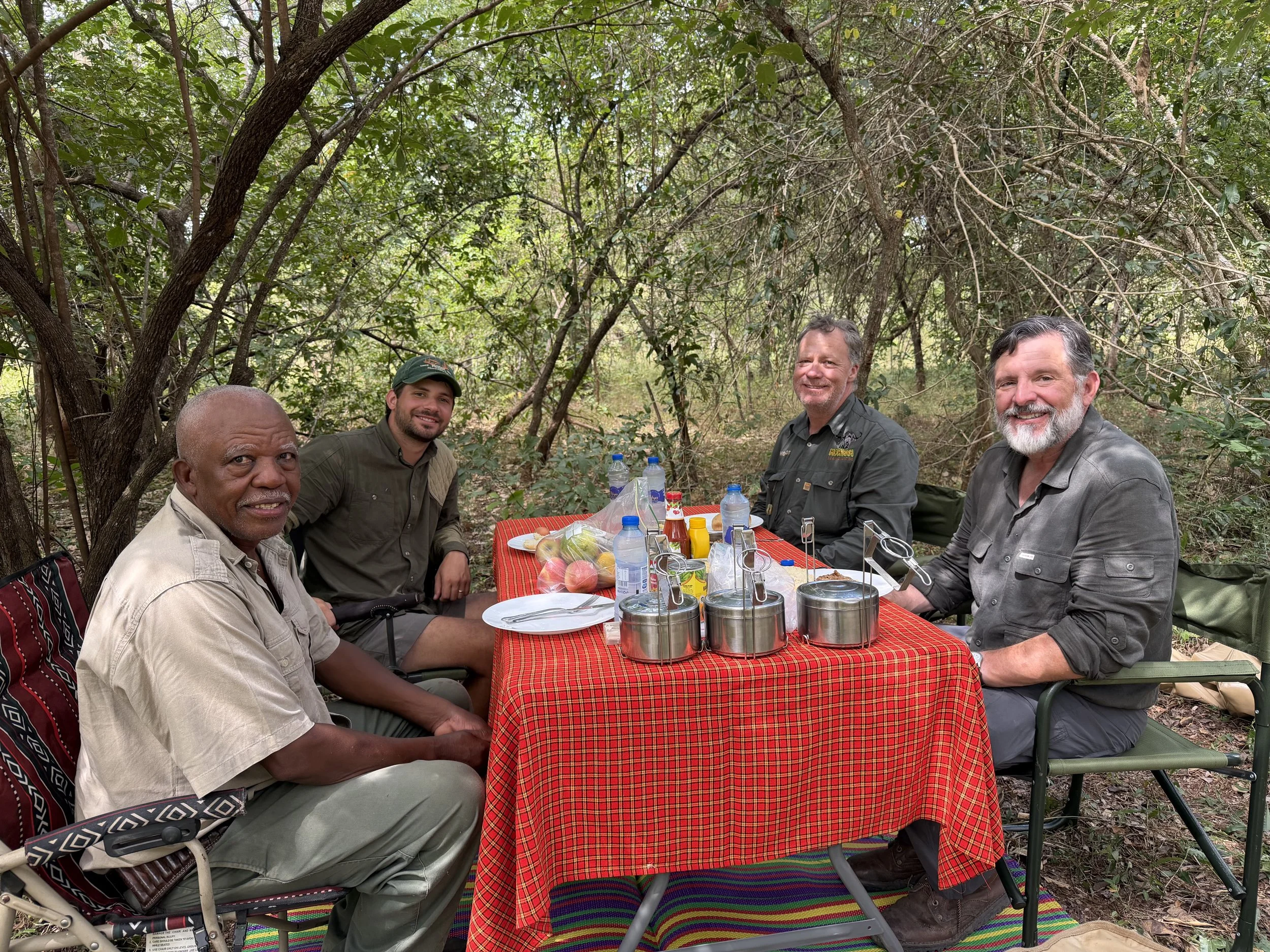
The days produced experiences that had nothing to do with pulling a trigger but became some of the most memorable moments of the safari.
On one occasion we encountered elephants in the bush. On another, we came upon three half-grown lion cubs that had a mongoose cornered in a tree.
Everywhere there was the constant reminder that we were hunting in a truly wild ecosystem, where you never knew what might be around the next bend or hidden in the grass ahead.
We often returned to camp late in the evening, tired, dusty, and ready for a drink.
Waiting for us were our camp servers, Julius and Blessings, who greeted us with hot towels to wipe the dust from our faces. Cocktails followed, and a fire would already be burning.
Those evenings around the campfire became as much a part of the safari as the hunting itself.
We would sit around the fire and have hors d'oeuvres—olives and biltong, hot nuts, popcorn, and, later in the safari, buffalo tongue, which should give some indication of what was still to come.
As we relaxed around the fire, Julius and Blessings would prepare the table for dinner. Afterward, with darkness settled over the bush, we could often hear lions roaring somewhere out in the night.
Then, the following morning, we would get up and do it all over again.
July 6 — The Buffalo
The sixth day of the safari was July 6, 2026.
We were up early again, but this morning we had something more definite to work with. Some of our team had received word that several dagga boys had been crossing fields near a small village on the edge of the concession.
We made the long drive to the village, where several local people joined us and showed us places where buffalo had recently crossed. We also picked up tracks in the sandy bed of the river.
The sign looked promising.
We took up the spoor and began walking.
For hours we followed the tracks deeper and deeper into the bush, moving through tall grass and eventually back into the heavy cover along the riverbank.
It was exactly the kind of buffalo hunting Mason had now spent nearly a week learning—follow the tracks, trust the trackers, watch the wind, and keep going.
While trying to sort out the tracks in the thick cover, we ran into elephants.
There were several cows with calves, and they were clearly agitated.
We had been told that elephants in this particular area were not especially fond of people. They sometimes entered the nearby village and destroyed crops, which naturally brought them into conflict with the villagers. Some villagers had been killed by elephants.
Now we were in heavy bush with several irritated cows and their calves nearby.
I was concerned about how close we were to them. Patson and Isaya appeared even more concerned, and they had good reason to be. I had heard that Isaya had once been working for a professional hunter who was killed by an elephant in the bush.
Patson and Isaya began leading Mason and me away from the elephants' path.
Wig, meanwhile, stayed behind a bush and began filming them as they crossed through the heavy cover.
I still have that video.
In it, you can see the lead cow coming through the bush with her trunk raised and her tail stretched straight out behind her, the others following close behind.
Then the last elephant cleared.
And standing behind them was a dagga boy.
He was headed in our direction.
The elephants crossed in front of us and turned left at about eighty yards. Wig whistled and motioned for Mason and me to come over to him.
I have to admit that, with those elephants still close by, I was a little nervous about moving back in their direction.
But I went.
When we reached Wig, he pointed out the buffalo to Mason.
It was a shooter bull.
After days of tracks, miles of walking, several stalks, close encounters, heat, dust, and searching, suddenly the buffalo we had come halfway around the world to find was standing in front of us.
Wig put up the shooting sticks.
Mason settled the .375 onto them and took aim.
He fired.
It was a perfect frontal shot.
Mason immediately worked the bolt, chambered another round, and made an excellent second shot.
The bull went about forty yards before going down in a patch of thick bush.
Then we waited.
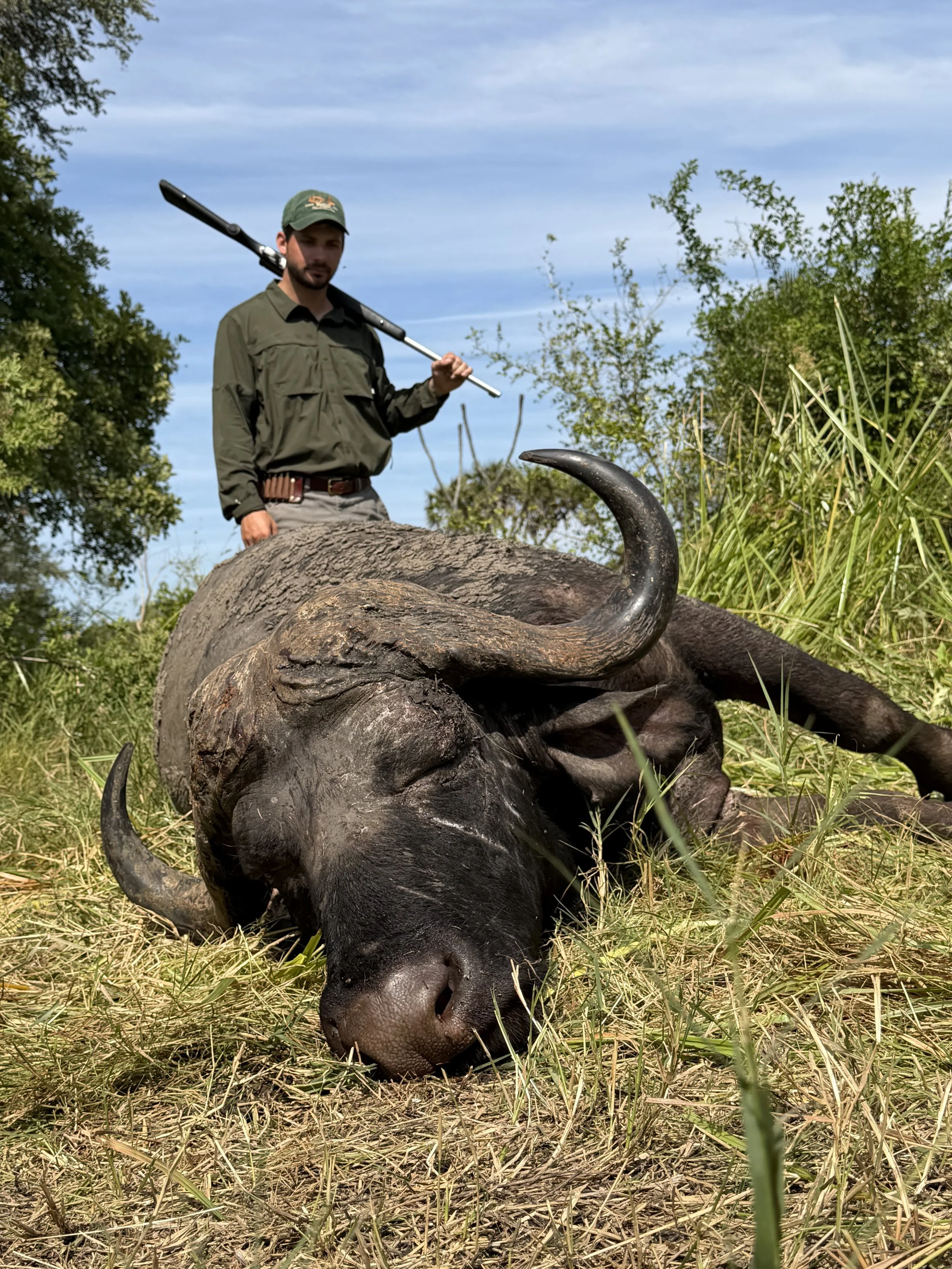
There is a tremendous temptation at a moment like that to rush forward, but a Cape buffalo deserves more respect than that, particularly when he has disappeared into heavy cover.
After giving him some time, we began our approach carefully.
As we closed to within about fifteen yards, we could finally see him lying on his side.
He was finished.
Mason had his buffalo.
After nearly a week of hunting, tracking, walking, learning, and experiencing firsthand what hunting Cape buffalo in wild Africa was really about, my son had taken his first dangerous-game animal.
The tension seemed to disappear from everyone at once.
There was an immediate sense of relief and celebration among the entire team. The trackers and other members of the crew began clearing brush and preparing the area so we could properly photograph the bull.
Mason, Wig, and I opened cold Kilimanjaro beers as we waited for the vehicles that had been called in by radio.
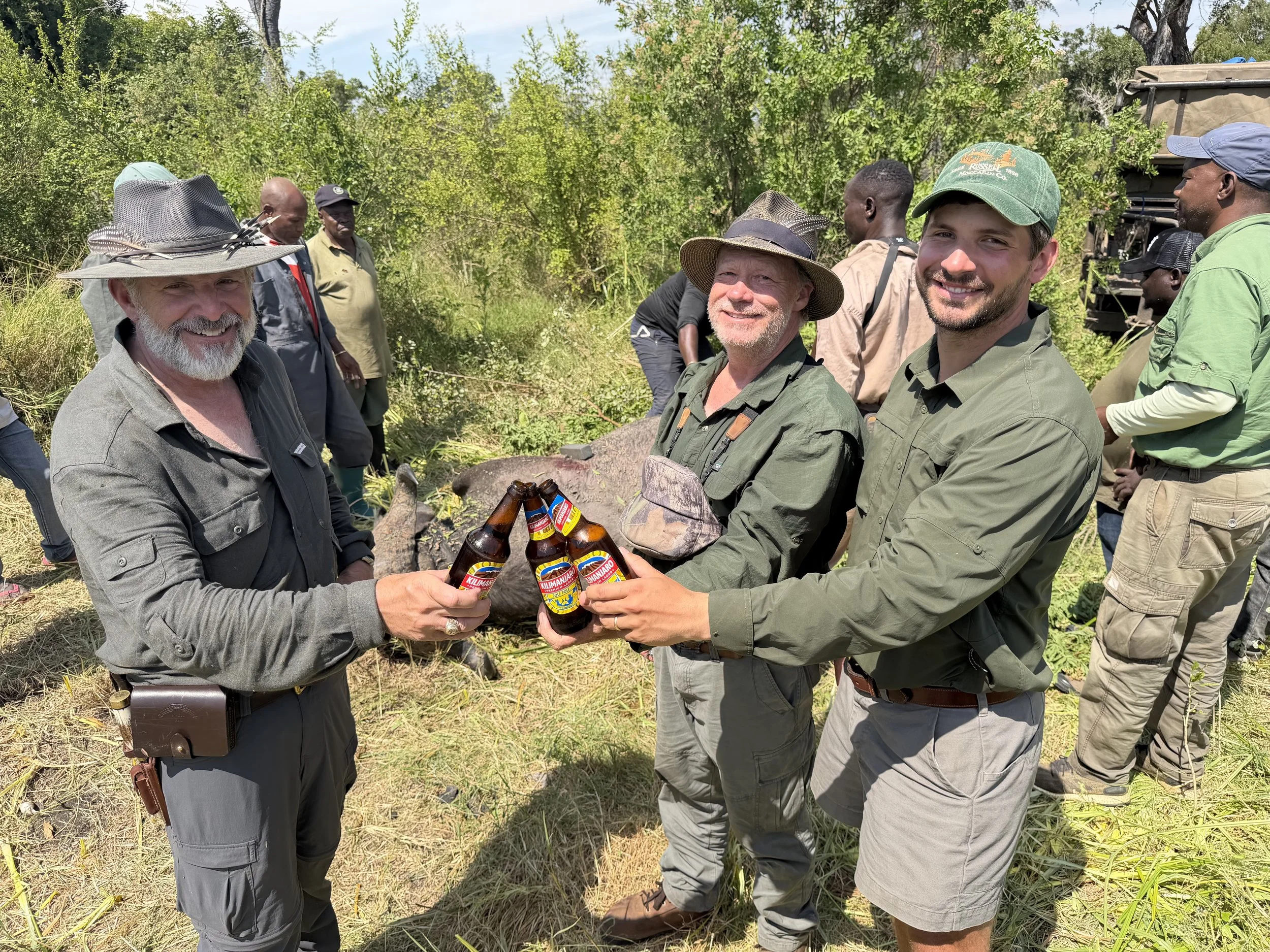
Standing there in the African bush beside Mason's buffalo, I felt an enormous sense of satisfaction.
I had done this before.
Mason had not.
And that was really why I had come.
My primary objective for this safari was not simply to hunt another buffalo myself. I wanted my son to experience dangerous-game hunting in a genuinely wild part of East Africa.
Mason had hunted plains game in South Africa before, but this was completely different.
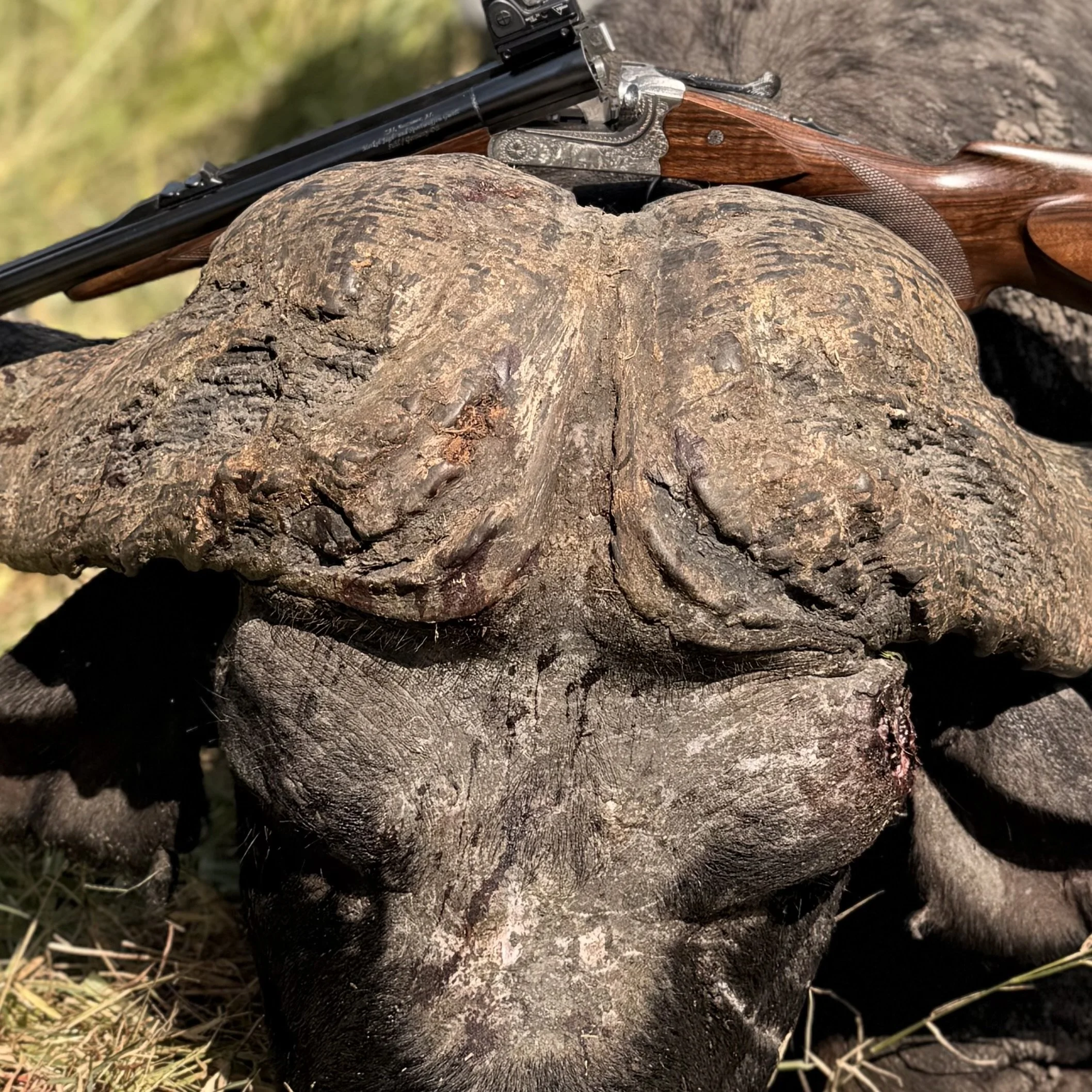
For nearly a week he had followed buffalo tracks through tall grass and thick riverine cover. He had learned to trust African trackers who could see signs in the earth that most of us would walk straight past. He had been close enough to buffalo to understand why they are respected. He had experienced elephants in heavy cover, lions in the bush, long days under the African sun, and evenings around a campfire listening to lions roar in the darkness.
And when his opportunity finally came, he was ready.
He made two excellent shots and took a fine old dagga boy.
More importantly, he had earned him.
The Safari Continues
The safari was ten days, and once Mason's buffalo was down, some of the pressure came off.
I was finally able to turn my attention toward doing a little hunting of my own.
I took a beautiful old Selous zebra stallion, an animal with striking black-and-white markings and without the shadow stripes seen on some other forms of zebra. They make particularly beautiful rugs.
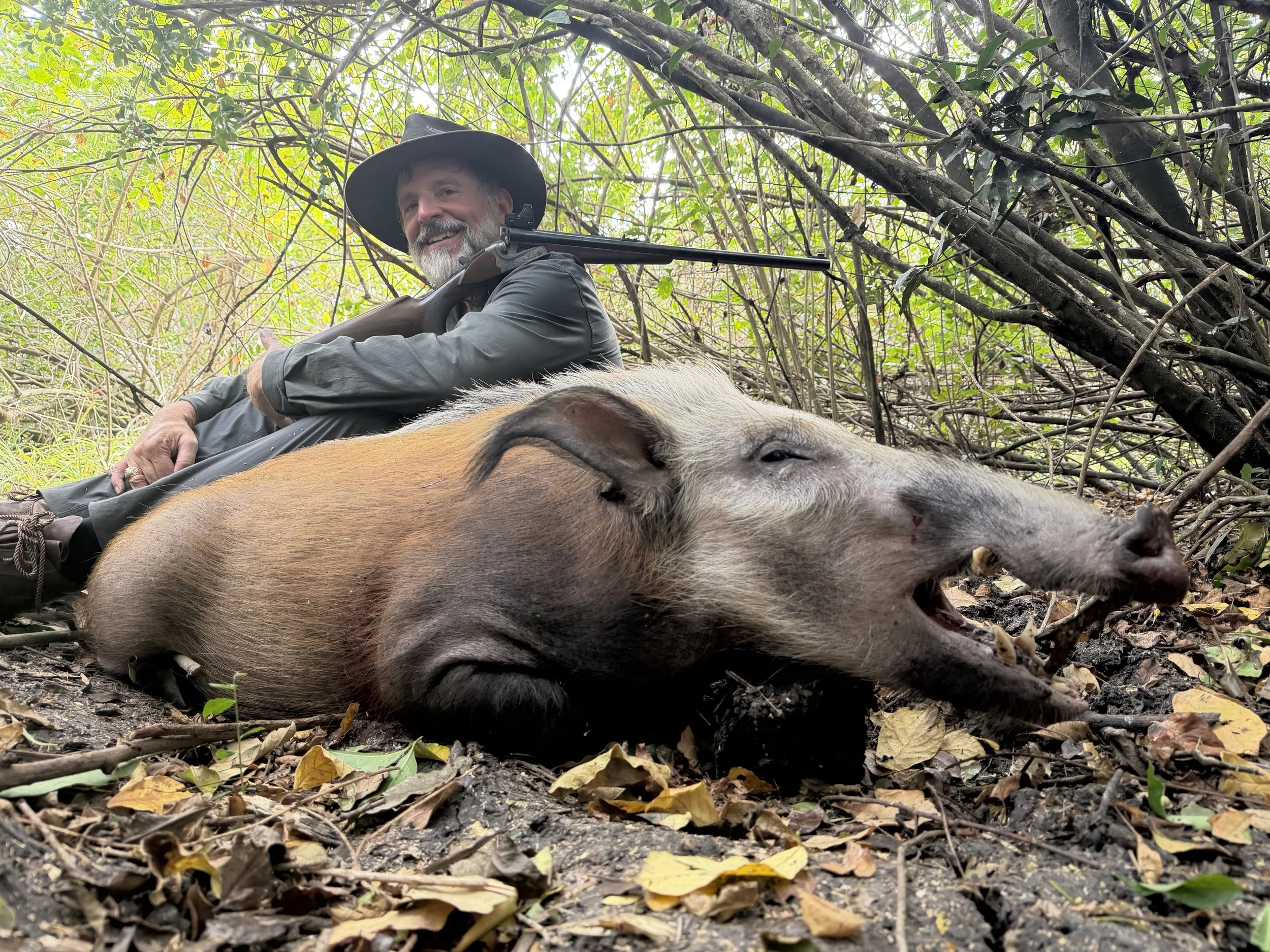
I also managed to take the elusive bushpig in the deep bush while we were hunting buffalo.
Finally, on the eighth day of the safari, I took a nice old dagga boy myself.
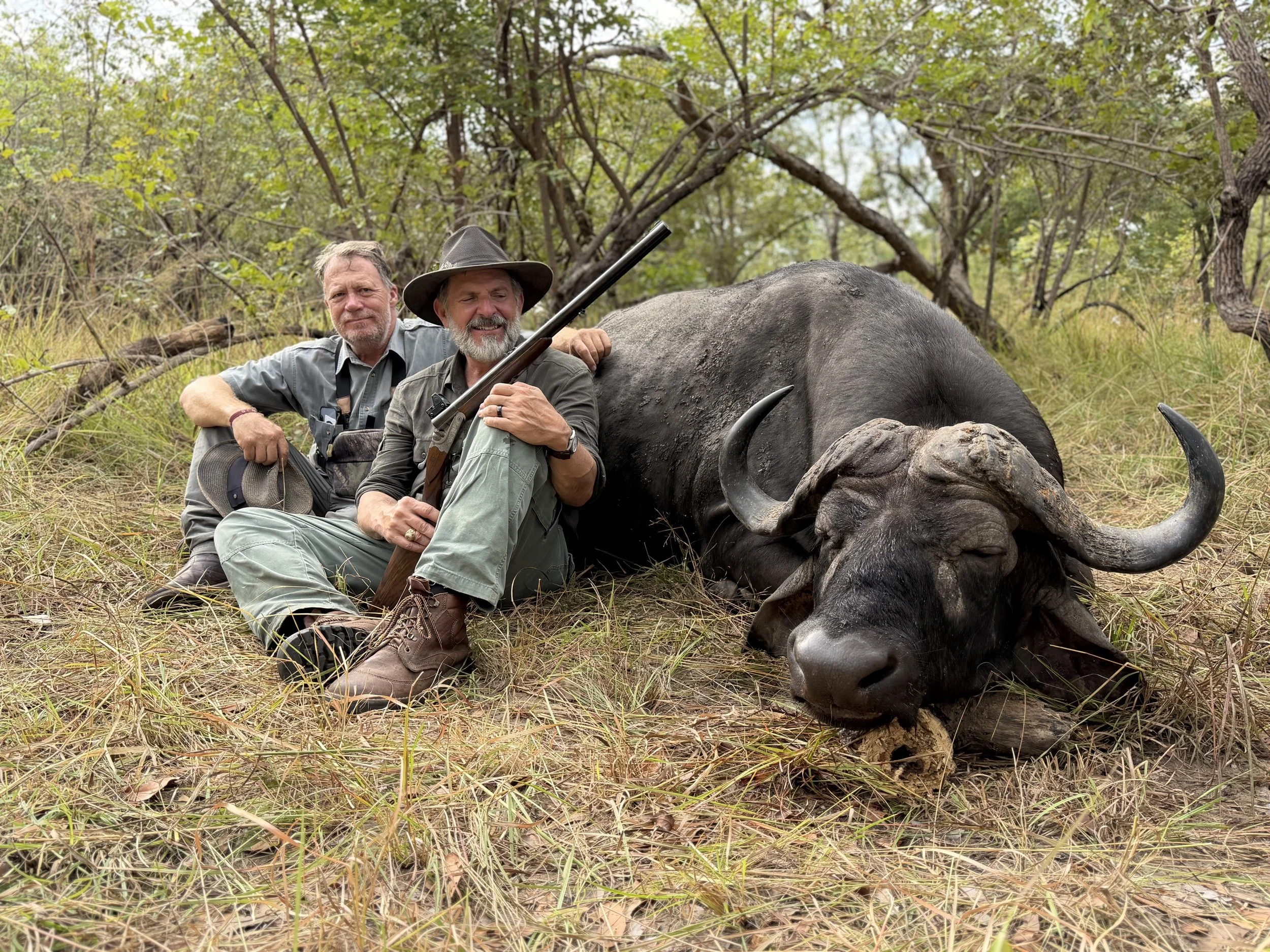
But I will save the details of that hunt for another time.
This was Mason's dangerous-game safari.
Looking back, the buffalo itself was only part of what made the experience important to me.
It was watching my son experience a kind of Africa that still exists far from the cities and tourist routes—the long hours following tracks, the uncertainty of what might be hidden in the bush ahead, the trackers and camp staff who became part of our experience, the lunches beneath shade trees, the evenings around the fire, and the lions roaring somewhere beyond the light of camp.
There is a moment after a successful hunt when the photographs have been taken, the congratulations exchanged, and everything becomes quiet again.
For me, standing there with Mason beside his first Cape buffalo, that was when the significance of the trip really settled in.
More than a century earlier, men like Frederick Courteney Selous had walked through this same great wilderness. Roosevelt had written about the Africa of his generation, and writers such as Haggard, Hemingway, and Ruark had helped create the image of Africa that captured my imagination long before I ever saw it myself.
That history was one of the reasons Tanzania had always called to me.
But in the end, this safari was never really about trying to recreate their adventures.
It was about having one of our own.
The trophies will remain, and the photographs will help preserve the details. But years from now, I suspect what I will remember most clearly will be the two of us following buffalo tracks through the African bush, the excitement in camp when Mason's bull finally went down, the cold Kilimanjaro’s afterward, and the sound of lions roaring beyond the firelight at night.
I have been fortunate to hunt Africa many times.
But being able to introduce my son to dangerous-game hunting in a place like Tanzania, and to watch him earn his first old dagga boy, is an experience I will always treasure.
I went to Tanzania partly because of the history.
I came home with something better.
A memory of our own.