Silver Salmon and Zombie Fish on Prince of Wales Island
I waded past the shallow bar into darker water, where recent rains had swollen the river and quickened the current. The channel was a deep cobalt blue, framed by brilliant shades of dark green and yellow along the banks. Across from me, fallen trees leaned into the river beneath the undercut shoreline.
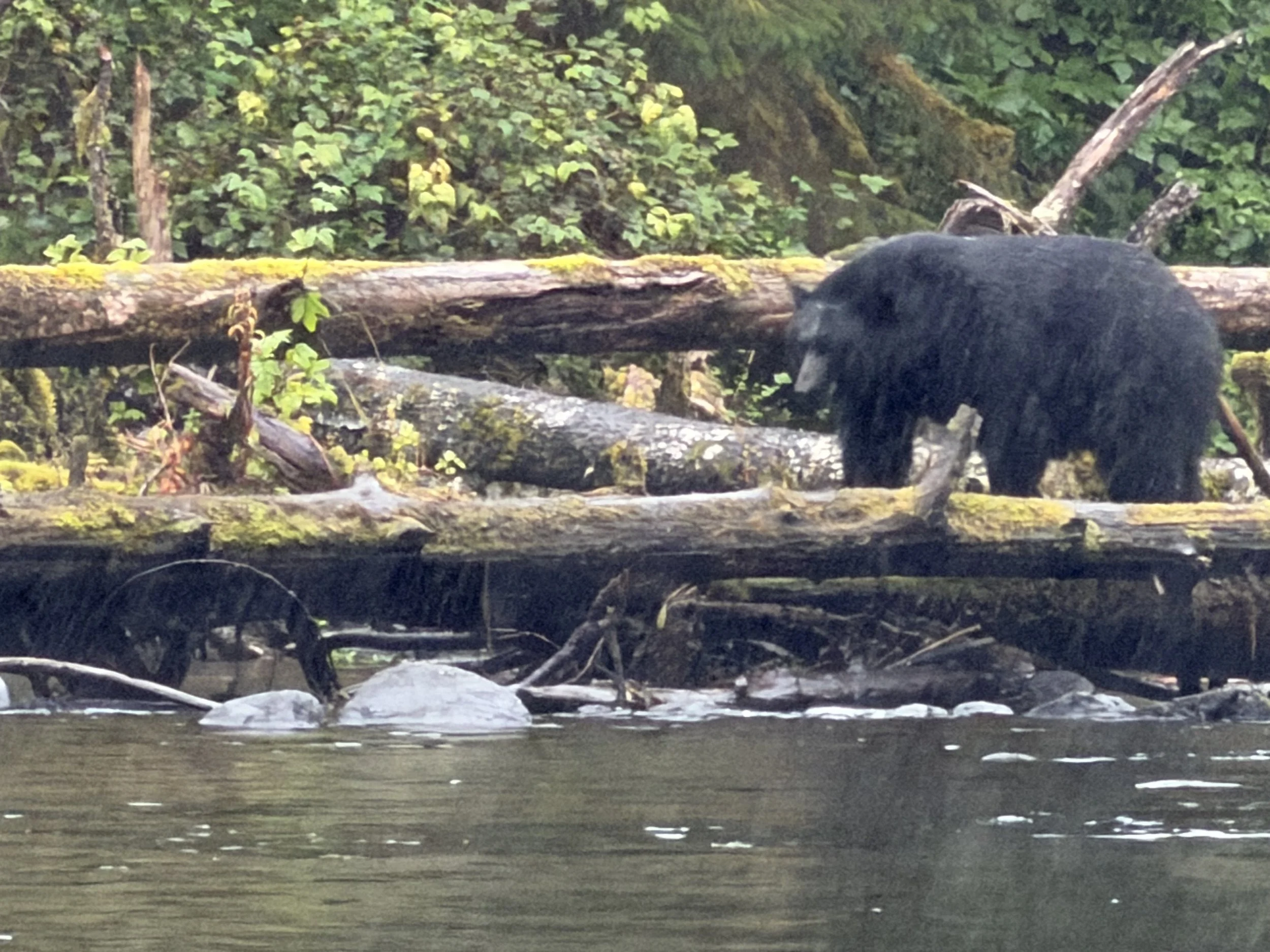
A fat black bear worked his way onto the deadfall, carefully balancing on the logs as he tried to fish salmon carcasses from the water. Judging by his size, he had been eating well.
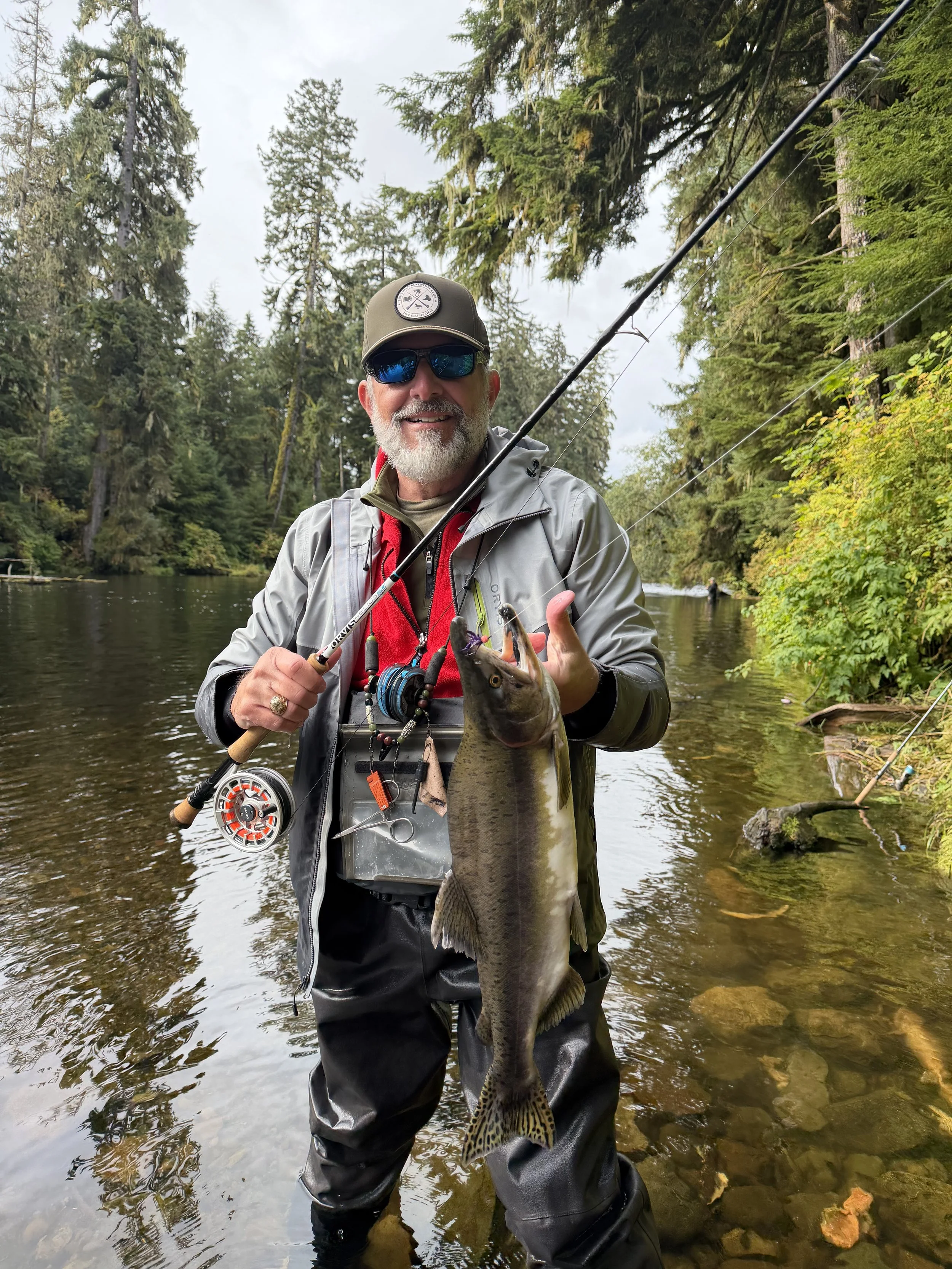
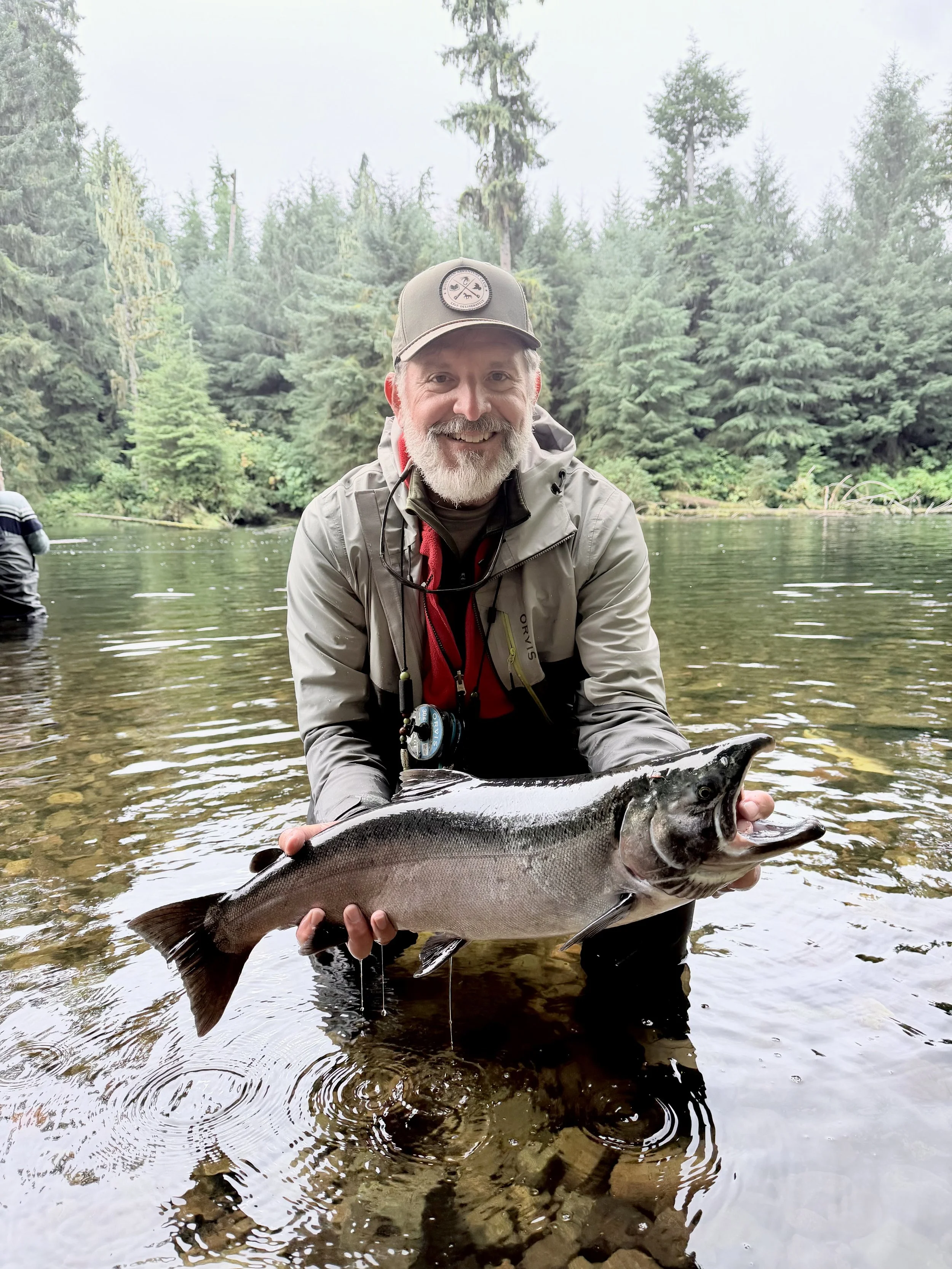
The pink salmon were nearing the end of their run. Some had already died, while others still held in the current, battered and pale, looking every bit like “zombie fish.” We were after the bright silver coho beginning to pour into the river with the rains—large, powerful fish fresh from the ocean, moving upstream as the water rose.
I made a double-haul cast upstream at a forty-five-degree angle and let my purple egg-sucking leech, with its bright pink head, drift through the current before stripping it back toward me. My back ached from days of casting and fighting fish, but it was hard to think about taking a break with fresh coho entering the river.
As I retrieved the fly, I could feel it bumping against the pinks crowded into the channel. I tried to guide it through without snagging one. Occasionally, that proved impossible, leaving me with the unpleasant task of freeing my hook from a fish that looked well into the process of decay.
This time, I made it through the traffic without a snag and sent another long cast upstream.
At the end of the drift, on my first strip, a fish struck hard.
I pulled firmly on the line to set the hook. The loose coils floating in front of me began shooting through the rod guides, and within seconds the fish was on the reel. I let the drag take over.
Landing these coho on a fly rod required finesse. With so much deadfall in the river, I had to steer the fish away from submerged timber and logjams while resisting the temptation to pull too hard and break the leader. These fish were fresh from the ocean, and they had plenty of gas left in the tank.
Patience was everything.
When the fish ran, I let it run against the drag. When it stopped and held in the current, I kept steady pressure and waited for a chance to gain back some line. Little by little, I worked it toward the bank.
Then came the net.
Just when a fish seemed ready to land, the sight of someone approaching with the net often sent it charging back into the river, stripping away the line I had worked so hard to recover. The dance would begin again: another run, another pause, another slow effort to bring it close.
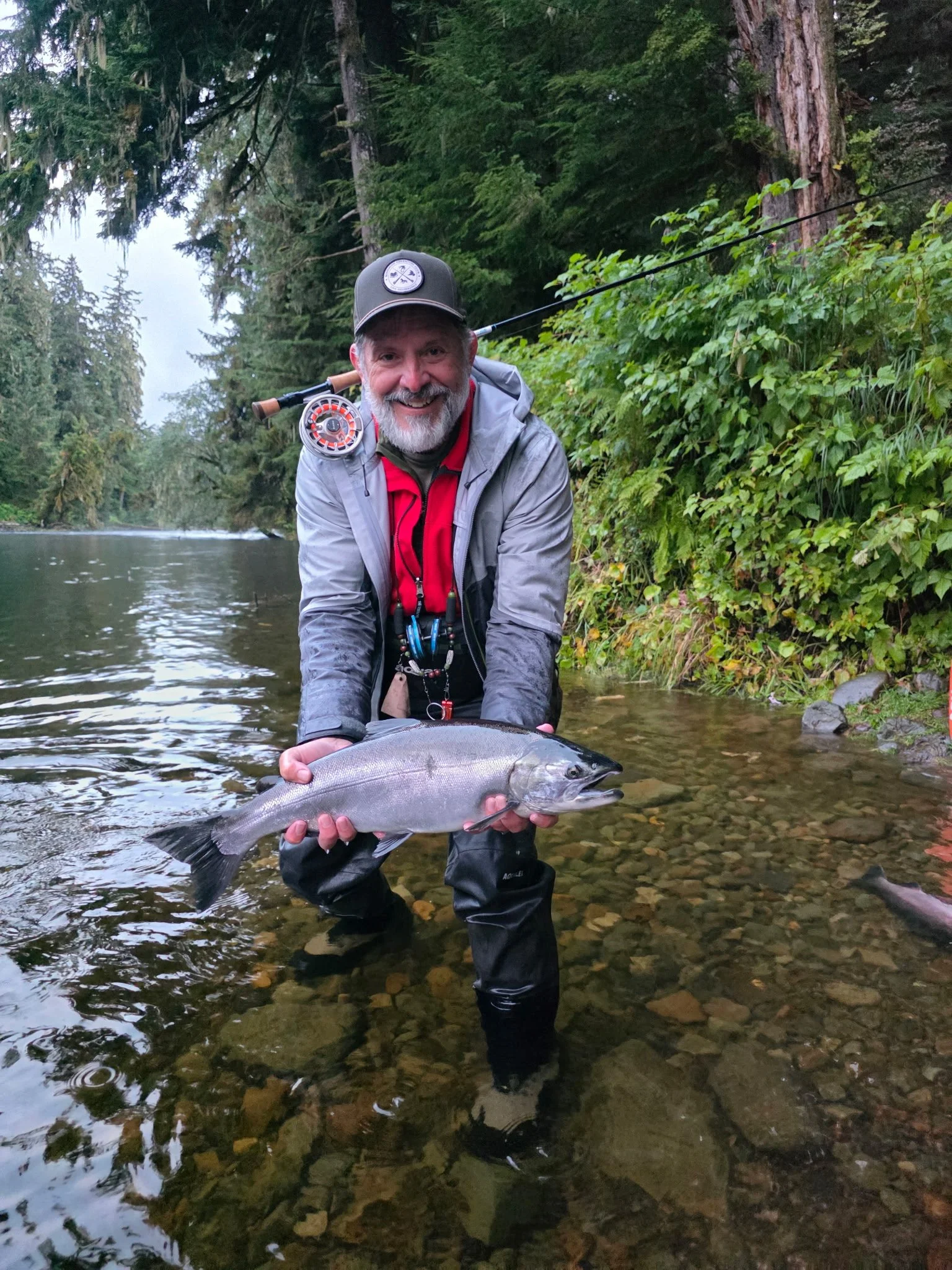
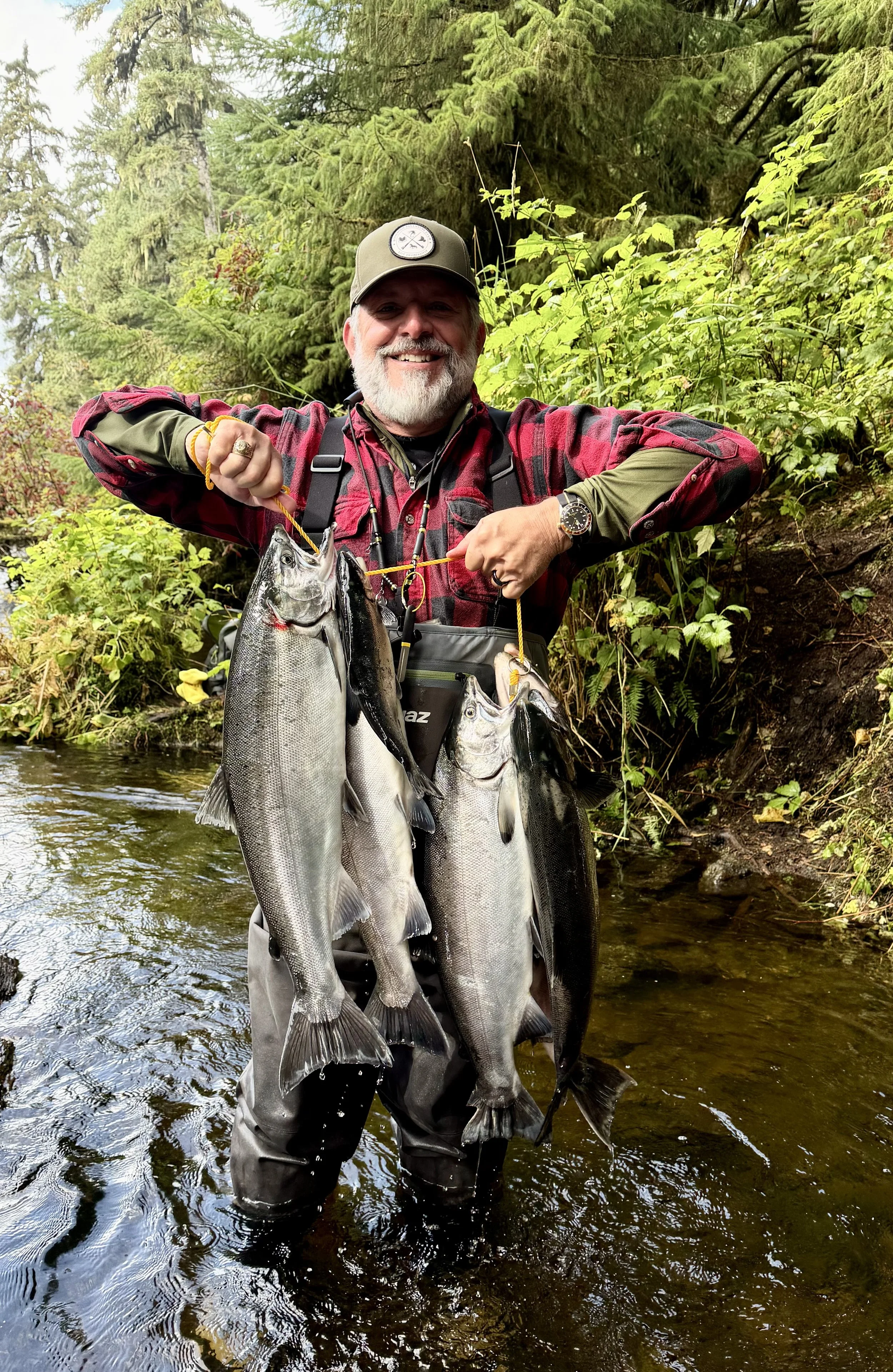
There were plenty of ways to lose. The hook could pull free. The leader could break. One determined run into a logjam could end the whole affair.
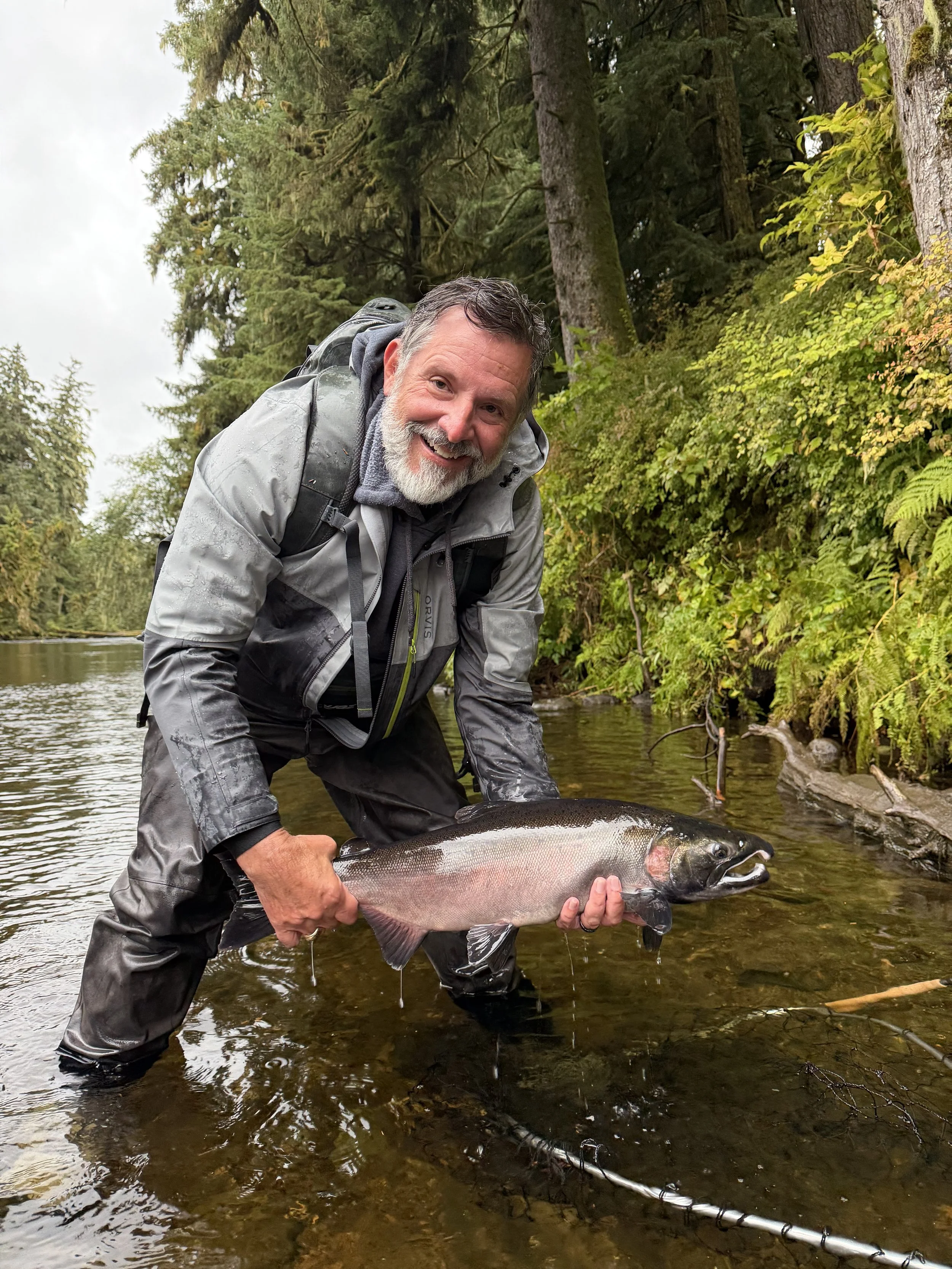
But when everything held, and I finally guided a bright coho headfirst into the waiting net, the effort was worth it. I was fortunate enough to repeat that process several times during the trip, and each fish felt like a prize.
Our adventure took place this September on Prince of Wales Island in Southeast Alaska. I joined several friends from the West Coast on a trip organized by my friend and outdoor writer Gary Lewis and his cameraman, Trevor. We rented a cabin and vehicles, taking a roughly three-hour ferry ride from Ketchikan to Prince of Wales Island before continuing to Klawock.
We spent most of our time on the Klawock River, with outings to the Harris and Thorne rivers as well. Between spinning tackle and fly rods, everyone landed plenty of fish, and we shared a lot of laughs along the way.
Looking back, I think about the cobalt water, the bear balancing on the deadfall, and the sudden pull of a coho at the end of a drift. My back needed a rest by the time we were done. I would have happily made another cast.