
Review of Ranch Life and the Hunting Trail by Theodore Roosevelt
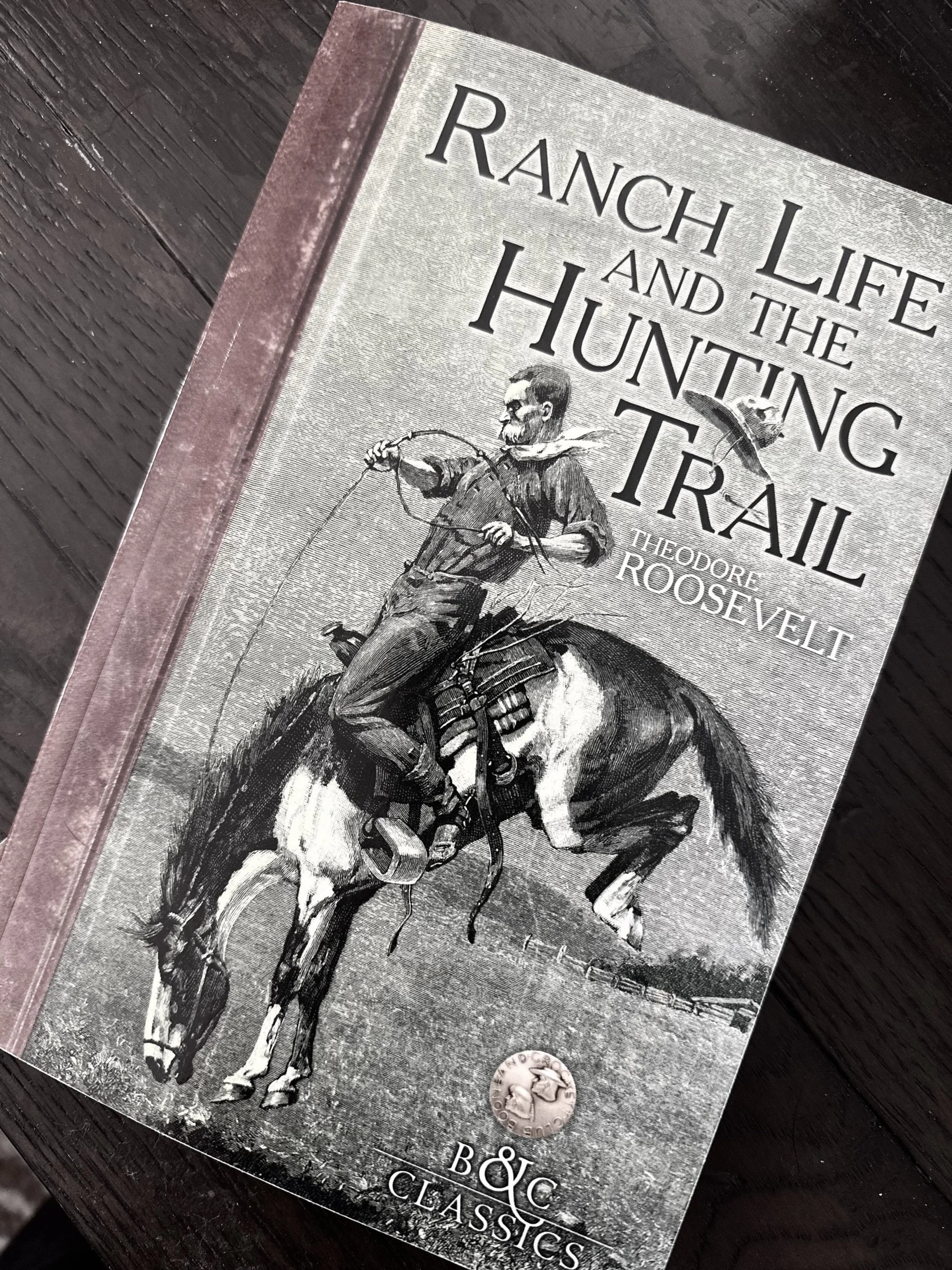
Ranch Life and the Hunting Trail is one of the many books I have read by Theodore Roosevelt. He is an excellent writer, and I always enjoy reading his work. He is extremely descriptive, and it is often amusing how detailed he becomes, especially when describing birds, game, and wildlife. His observations are precise and vivid.
Roosevelt purchased a ranch in the Badlands of the Dakota Territory in 1883. After the tragic deaths of his wife and mother on the same day in 1884, he moved west to expand his cattle business and to occupy his mind. While there, he acquired the Elkhorn Ranch and spent his time ranching and hunting in an effort to escape his grief. He lived at the ranch for about four years and lost roughly 60% of his livestock during the disastrous winter of 1886–1887. He eventually sold the ranch in 1890.
The book centers on his experiences learning to become a ranchman and hunter. Roosevelt is especially interesting because he was a Harvard-educated, well-traveled intellectual who had been a sickly and weak child. Few would have imagined that he would one day head west to associate with cowboys and frontiersmen. Yet he seemed to get along with nearly everyone and overcame his physical challenges through sheer determination. He fully embraced the cowboy life, and from the tone of the book, it almost reads like an extended rugged holiday, though certainly not without real danger.
He was in the region not long after it had been settled. There were still Native American tribes roaming freely and all types of rough frontier characters, including men who would later become figures of western legend. He recounts a tense standoff with a band of Native Americans on the prairie, where he stood firm with his rifle to protect his horse and possibly his life. In another episode, horse thieves stole his ranch boat. Roosevelt and two cowboys constructed a makeshift raft, pursued the thieves, captured them, and brought them to a frontier town for jail.
Several times he describes being snowed in at remote cabins or dugouts alongside rugged companions. In one instance, while waiting out a snowstorm, he passed the time by reading Shakespeare’s Hamlet from his pocket version and discussing it with a cowboy. During the pursuit of the horse thieves, he also mentioned reading Tolstoy’s Anna Karenina as they transported the captured men through the wilderness. I find it amusing and admirable that Roosevelt could be roaming the Wild West with cowboys and outlaws while carrying Shakespeare and Tolstoy in his pocket.
I am grateful he wrote the books he did. He preserved important pieces of Americana, and his descriptions of western game and hunting methods are outstanding. It is a rare treasure that such an intellectual man could immerse himself in the raw, untamed American West and record it so vividly for future generations.
Roosevelt’s passion for adventure continued long after his Dakota years—through his African safari, his exploration of the Amazon basin, and his leadership of the Rough Riders during the Spanish-American War. It is interesting that when forming the Rough Riders, he recruited both his Harvard polo-playing friends and his cowboys from the Dakotas—two very different worlds united under his leadership.
I deeply appreciate the kind of man he was. I try to live in a similar way, valuing literature and culture while also believing in the rugged, vigorous life of the outdoors: hunting, fishing, horseback riding, and meeting people from all walks of life. I would have very much liked to meet Theodore Roosevelt. He truly was a remarkable man who lived more life than most, even though he died relatively young at age sixty.