Riding Through History: A Horseback Journey in the Loire Valley
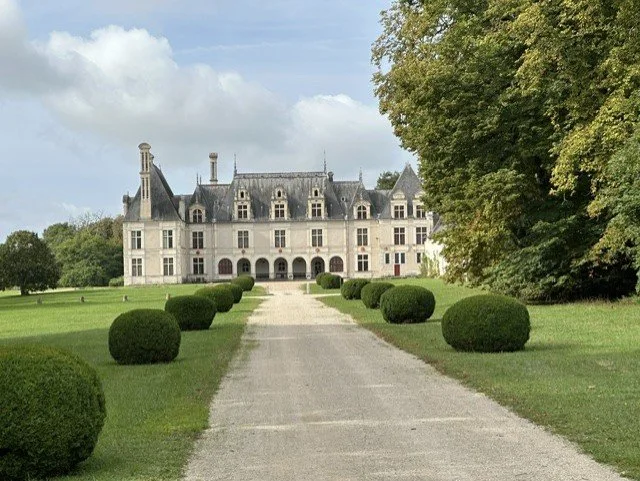
From September 13th to September 20th, 2025, we set out on a horseback adventure through the fabled Loire Valley of France—a region known as the Garden of France and home to some of the most iconic châteaux in Europe.
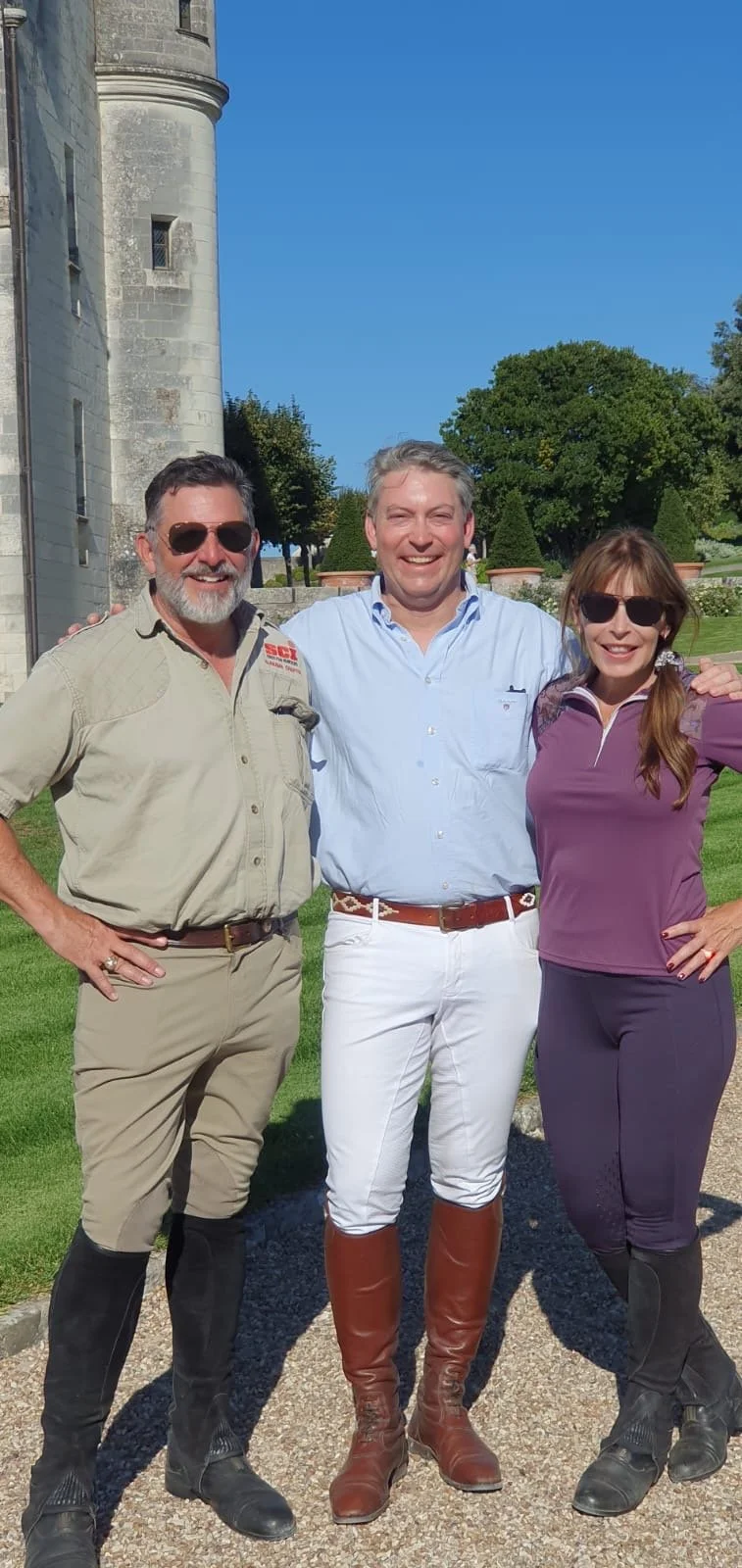
Our group of riders was small but diverse: Craig and Laura Gall from Alabama, Cornelius Hansch from Germany, and Jesse and Helena Poole from Montana and Brian and Gretchen Smith from Alabama. We were guided by Ken Poste, a seasoned French horseman with a calm but confident presence, while his assistant Betsy kept everything flowing smoothly, driving the luggage van and ensuring our comfort at every stop.
Arrival at Château de la Borde
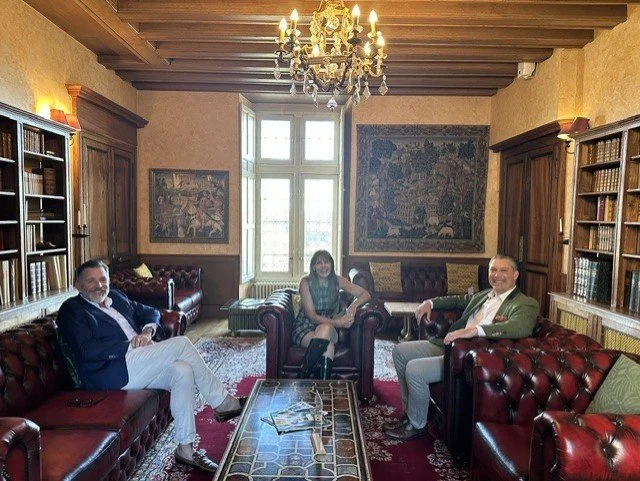
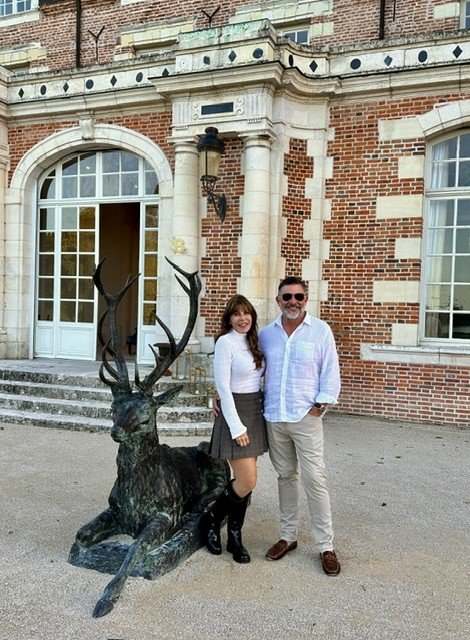
On arrival, we were welcomed at Château de la Borde in Vernouë-en-Sologne. This elegant château, with its centuries-old stone walls and manicured grounds, set the tone for the week ahead. That evening, over a lavish dinner, we met our fellow riders and listened as Ken outlined the days ahead. The Loire Valley, he reminded us, is not just a land of castles but of kings, wars, and artists—it was here that the Renaissance truly bloomed in France.
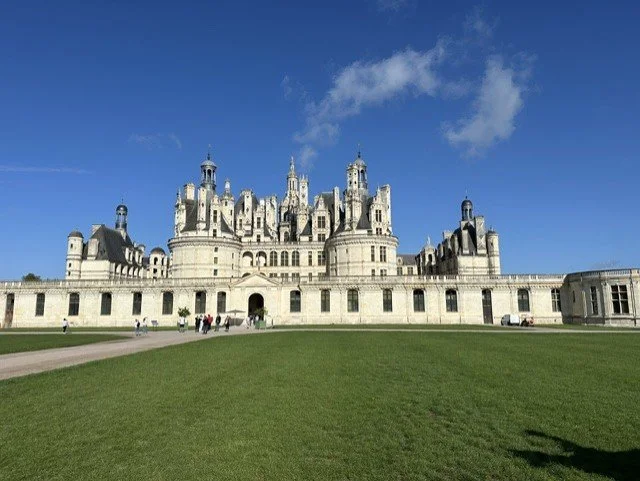
Day 1 – Chambord: Horses, Hunting Grounds, and Royal Ambition
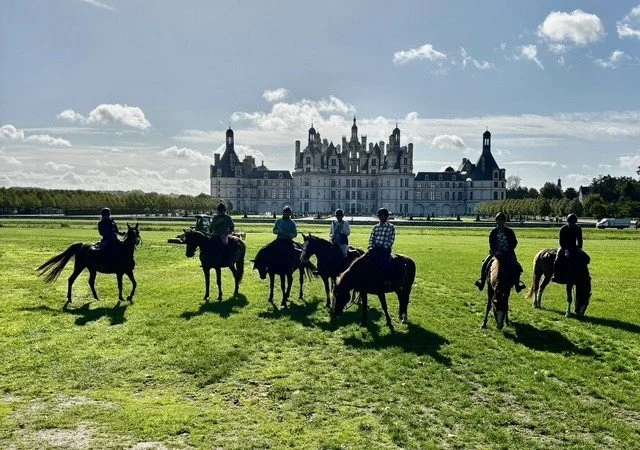
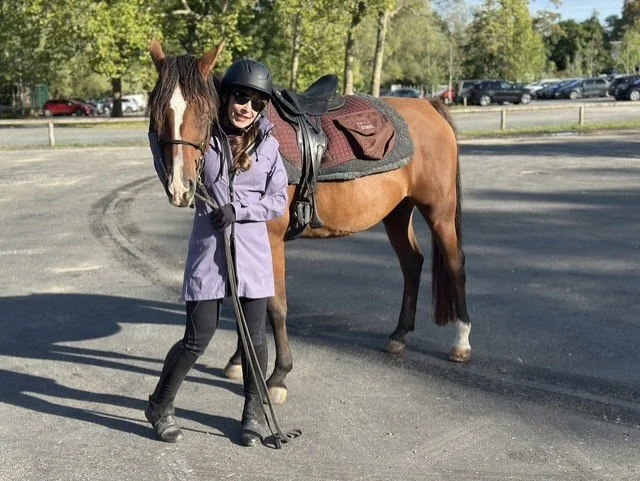
The next morning after a leisurely breakfast, Betsy drove us to Chambord, where our horses awaited. Gretchen’s mount, a chestnut mare named Asia (part Arabian, part Freiberger), stood alert with bright eyes, while I was paired with Erica, a towering 17-hand Freiberger mare, steady and sure-footed. Both had white socks, gleaming against their chestnut coats, and we were outfitted in English tack.
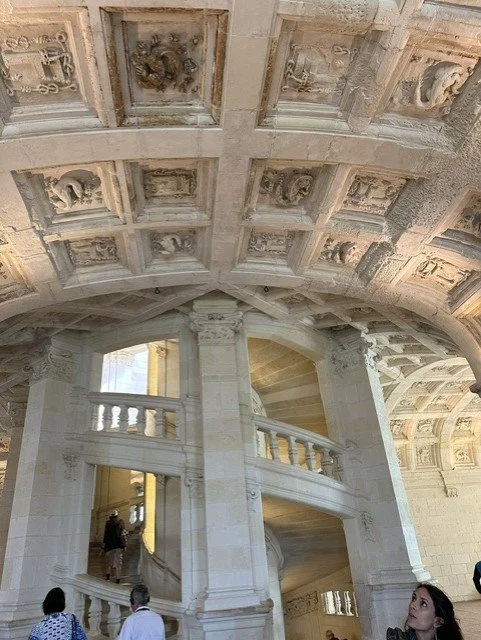
We set off through the countryside, passing fields, villages, and woodlands before arriving at Château de Chambord—a structure so grand it almost feels like a dream. Built in the 16th century for King François I, Chambord was less a residence than a symbol of royal power and Renaissance genius. Its double-helix staircase, possibly influenced by Leonardo da Vinci, remains one of the most remarkable architectural feats of the era.
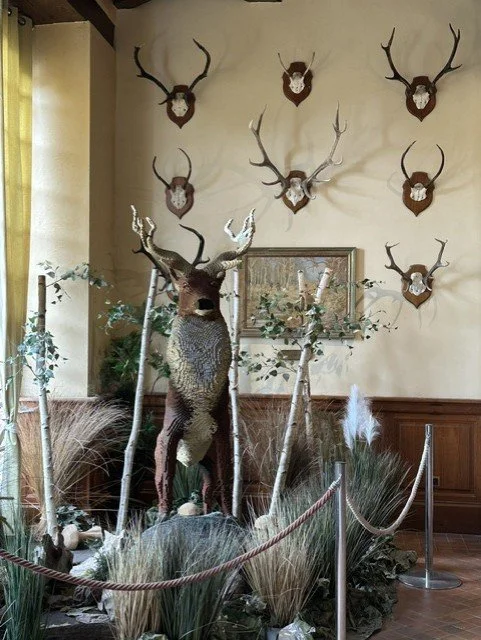
We rode the hunting trails surrounding the castle, where French nobility once pursued stag and boar. Even today, signs of wild boar rooting through the earth are everywhere, along with elevated hunting stands still in use. After dismounting, Sara, a local historian, led us through the château itself, sharing stories of kings and courtiers. That evening, we returned to Château de la Borde, where another gourmet meal awaited.
Day 2 – Beauregard and Cheverny
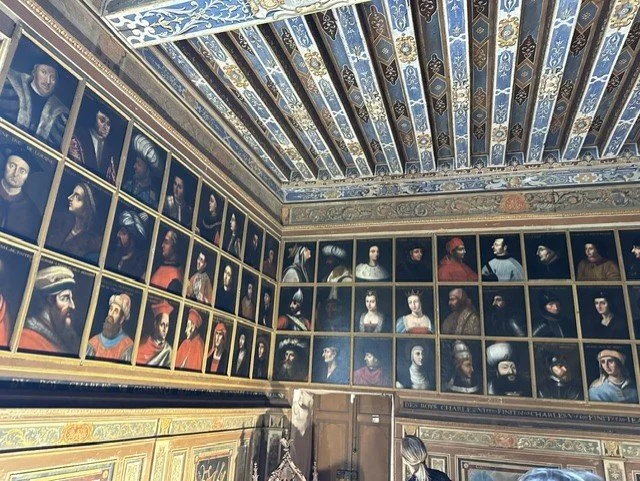
By morning, we were already in rhythm with the horses. Our ride wound through shaded forest trails, emerging in time at Château de Beauregard. Once a royal residence, it became famous for its Gallery of Portraits, where over 300 historical figures gaze down from the walls. We lunched in the Orangerie, sunlight spilling through tall windows, and then rode on into the Boulogne Forest, weaving through trees and vineyards before reaching Château de Cheverny.
Unlike Chambord’s grandeur, Cheverny is known for its warmth and symmetry. It has been in the same family for centuries and is still privately owned. Cheverny also inspired Hergé’s depiction of Captain Haddock’s mansion in the Tintin comics. After a tasting of local wines, Betsy drove us to Relais des Trois Châteaux, where we feasted before settling in for the night.
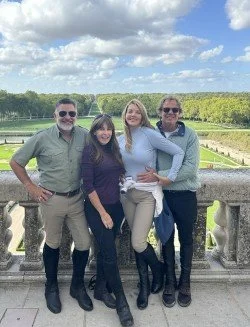
Day 3 – Chaumont and the Loire River
Our path next took us into the Touraine countryside, riding along fields and riversides. Lunch awaited us in Candé-sur-Beuvron, followed by an unforgettable stop at Château de Chaumont-sur-Loire, perched dramatically above the river. Built in the 10th century as a fortress, it later became a Renaissance jewel and a hub for artistic salons. Catherine de’ Medici once owned it, before forcing Diane de Poitiers—her late husband King Henri II’s mistress—to take it in exchange for the more elegant Chenonceau.
As we walked its halls and gardens, history seemed to linger in the air. That evening, we were welcomed at Domaine des Thomeaux, where dinner was both rich and refined.
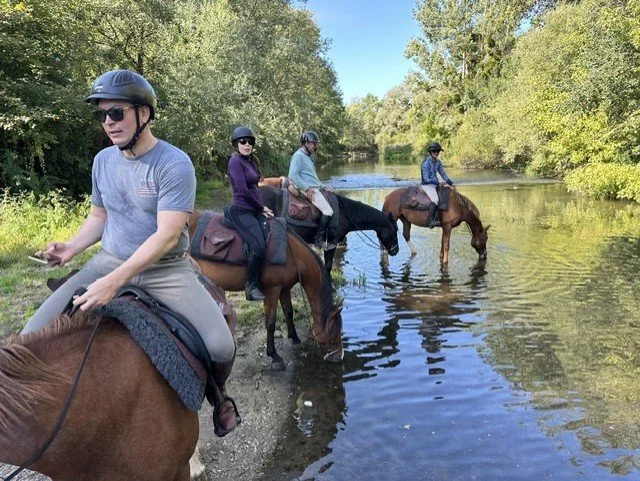
Day 4 – Amboise: A Royal and Artistic Legacy
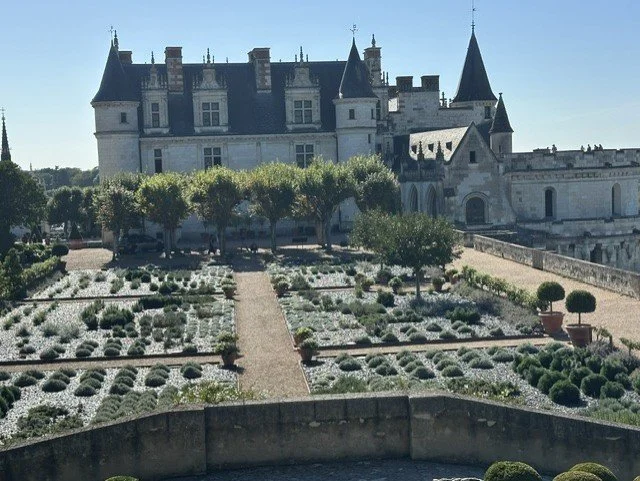
We mounted again near Mosnes and followed trails into the historic town of Amboise. Lunch was in a small local restaurant, filled with the smell of fresh bread and cheeses. From there, we rode directly into Château d’Amboise, entering through its medieval gates like travelers from another century.
This château holds special significance—it was here that Leonardo da Vinci, who spent his last years at nearby Clos Lucé, was buried. The view over the Loire is sweeping, and it’s easy to imagine the French Renaissance court bustling through its halls. That night we retired to Château de Noizay, where luxury met history, and the evening ended with wine and conversation beneath vaulted ceilings.
Day 5 – Chenonceau and Farewell to the Horses
Our final full day on horseback brought us to perhaps the most enchanting château of them all: Château de Chenonceau, the “Ladies’ Castle.” Stretching across the River Cher on graceful arches, it has been shaped by powerful women—Diane de Poitiers, Catherine de’ Medici, and later Louise Dupin, who protected it during the French Revolution.
After exploring its galleries and gardens, we mounted our horses one last time, trotting and cantering along the riverbanks with Chenonceau’s arches rising in the distance. The horses, ever steady and kind, carried us beautifully to the journey’s end. Saying goodbye to them was harder than expected—they had become our partners, steady companions on this ride through history.
We lunched at the château’s Orangerie, then spent the afternoon shopping in Amboise before a farewell cocktail with Ken. That evening, back at Château de Noizay, we cooled off with a swim in the pool and lingered over one final dinner together, savoring both the food and the memories we had made.
Departure
The next morning, we departed for Paris alongside Craig and Laura, the Loire Valley slowly receding behind us. The week had been a blend of history and horsemanship, of forest rides and castle tours, of laughter shared with new friends and the quiet rhythm of hooves on ancient trails.
It was more than a trip—it was a passage through time, lived in the saddle.